

REAL GDP GROWTH SURPRISES, 25Q2
Whereas 25Q2 GDP figures were slightly better than expected, the sideways and erratic growth trend did not change. Real GDP bounced by 0.8% compared to 25Q1, following a flat tendency during the first quarter (real GDP up 0.1%).
More importantly, what did change, is the composition of sectoral growth. This time around, it was the primary and manufacturing sectors which drove the 25Q2 bounce, growing by 3.2% and 1.8% respectively compared to the first quarter; the tertiary sector delivered little growth, expanding 0.5% (with internal trade growing 1.7%; government by 0.7%; personal services by 0.5% and the financial sector lagging this time, showing marginal growth of 0.3%). It is doubtful that the change in the sectoral composition of growth will be sustained – the lagging secondary sector is reflected in both a year-on-year perspective (-1.7%) and when compared to pre-covid 2019 levels (-11.3%).
This compares to the primary sector (agriculture and mining) up by 4.8% and the tertiary sector up by 6.6%. Considering the composition of the secondary sector, the picture is most worrying, with manufacturing still down 7.3%; water & electricity down 9.1% and construction – reflecting fixed investment tendencies – down a whopping 28.9%. In the same vein, it should be added that the growth potential in a meaningful (and balanced) economic recovery lies in these lagging sectors over the short- to medium-term.
The sectors that have driven post-pandemic growth were financial & business services (up 14.1%); personal services (up close to 10%) and a modest expansion of government real value add of 1.5% compared to 2019 levels. Even retail, wholesale & accommodation (-2.9%) and transport & communication (-0.2) have not recovered to pre-covid levels. In all, the 25Q2 sectoral growth results do not change the flat supply-side of the economy. The 25Q2 rebound in the agriculture, mining and manufacturing sectors is welcome but needs to be sustained.


This is a hard ask in view of the hostile external trading environment, as well as the structural constraints faced by these sectors.
Almost six years following the covid pandemic impact, real GDP is up by only 3% in 25Q2. The demand side of the economy also continue to reflect weak fixed investment (contracting) and counter-balanced by some resilience in real household and government consumption spending and investment in inventories (see charts).
On the expenditure side of the economy, real household spending (up 0.8%, quarter-on-quarter) and government consumption (up 0.7%) account for the bounce in real GDP (0.8%). Real household spending (up 2.8%) accounts for the bulk of the year-on-year real GDP growth (1.1%).
Compared to pre-covid levels, it is again these two expenditure components (6.1% and 3.7% respectively) accounting for the real growth in spending on GDP (3.0%).Real exports and imports contracted during 25Q2 (3.2% and 2.1% respectively, and fixed investment (contracting too, by 1.4%).
In sum: the business cycle
The fixed investment picture is most worrying – down 14% in total (public sector, 20% and the private sector, 11.6%. What accounts for post-covid growth in expenditure on GDP, is real household consumption spending (HCE), expanding by 6.1%, with all four sub-components contributing, i.e., spending on durable and semi-durable goods, as well as spending on non-durable goods and services.
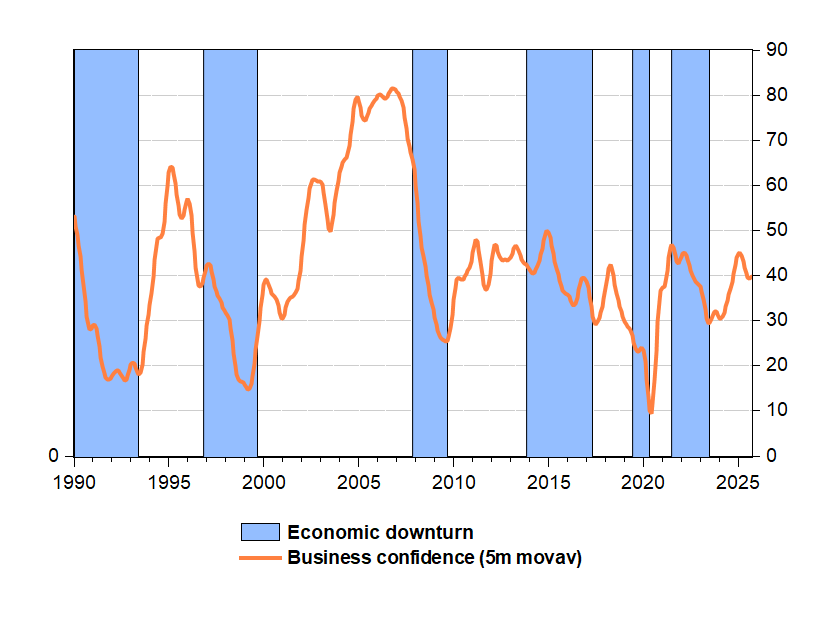
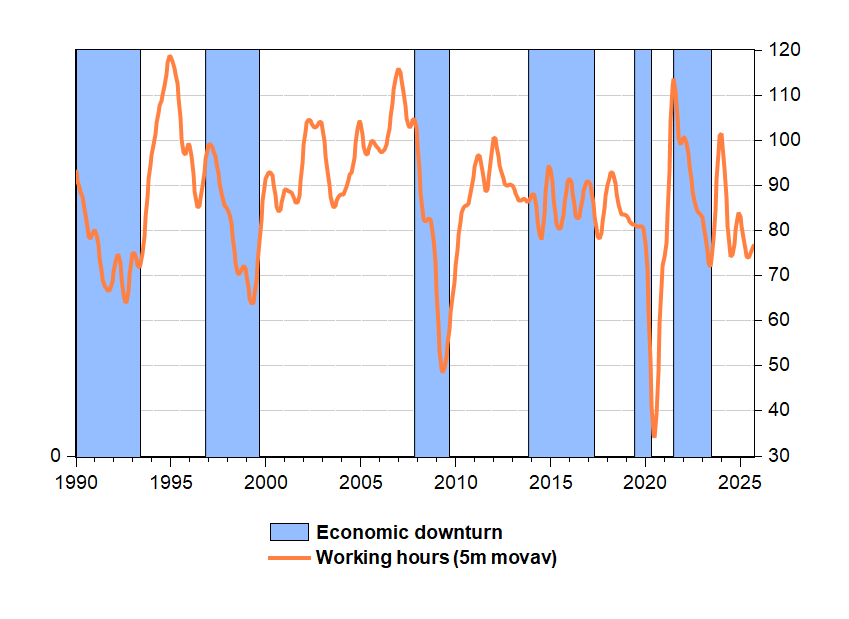
From the onset, one must acknowledge that the usual business cycle forces are not at work, given the tumultuous geo-political influences and the domestic socio-political changes. Under these conditions of high uncertainty, the focus of business executives is on remaining in business, rather than growing market share. It is often noted that – outside of investment in renewable energy – SA’s business executives are on strike.
Rather than typifying business investment as weak, the business climate is not conducive to robust capital spending. The main characteristic of the business cycle is that general demand conditions are less than robust, being erratic and stagnant at times. Furthermore, debilitating red tape for SMMEs, lack of demand, added costs owing to poor infrastructure maintenance, the impact of corruption, e.g., ‘construction mafias’, non-(or late) payment by public sector entities, etc.; and the challenging international trade environment with trade diversion being a key focus, are other features.
In such a business climate autonomous investment projects should lead the way (e.g., during the late 1970s and the early-1990s), not impacted by the typical drivers of private fixed investment. Public-private sector partnerships (PPPs) are expected to provide the lift-off.
Resilience is detected in household (and, of course, government) spending. The 25Q2 GDP figures and the tendencies during the post-coronavirus pandemic period reflect this. See the accompanying charts. During the initial two-and-a-half years following the trough of the coronavirus pandemic, real household spending trended right up there as – and even stronger – than during previous economic upturns from the 1970s.From the end of 2022 (and gross domestic fixed investment, from mid-2023) spending trended well below previous economic expansions in comparison.
Noteworthy, is the strong fixed investment trajectory of the late 1970s and early-1990s, when autonomous fixed investment projects were part of the picture. The second phase of SA’s record postwar economic expansion (end-1999 to end-2007), from around 2003-04, delivered similar momentum in fixed investment spending, being the propagator of the historic economic expansion.
Suffice to conclude, until SA’s structural economic reform policies and the infrastructure drive do not develop sufficient momentum, business cycle rigidity will remain, albeit that this reflects substantial economic resilience, viewed in perspective. History may not repeat itself, but it does rhyme.
US ECONOMY REMAINS RESILIENT, 25Q3
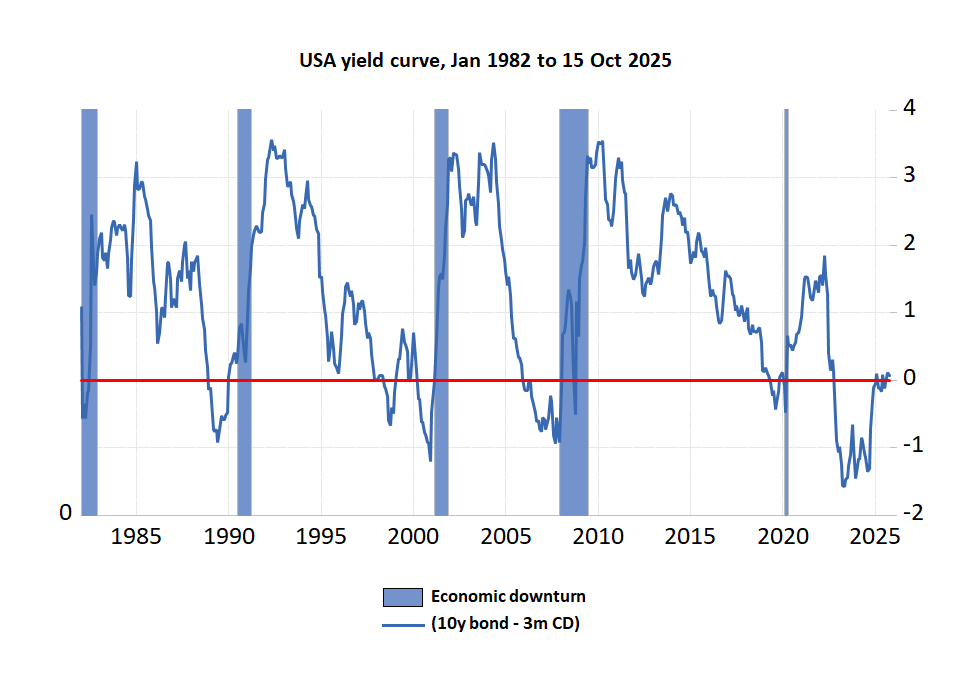
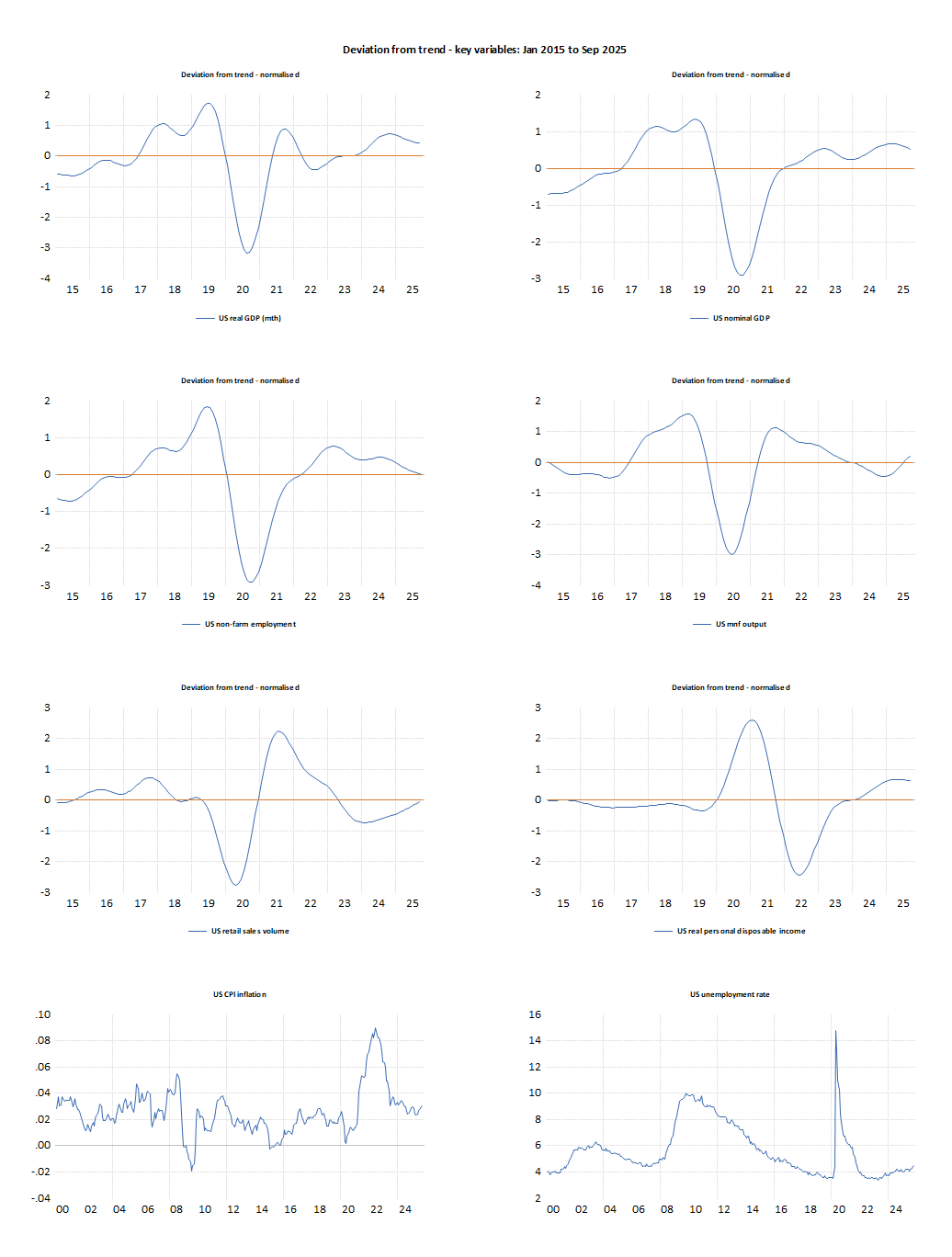
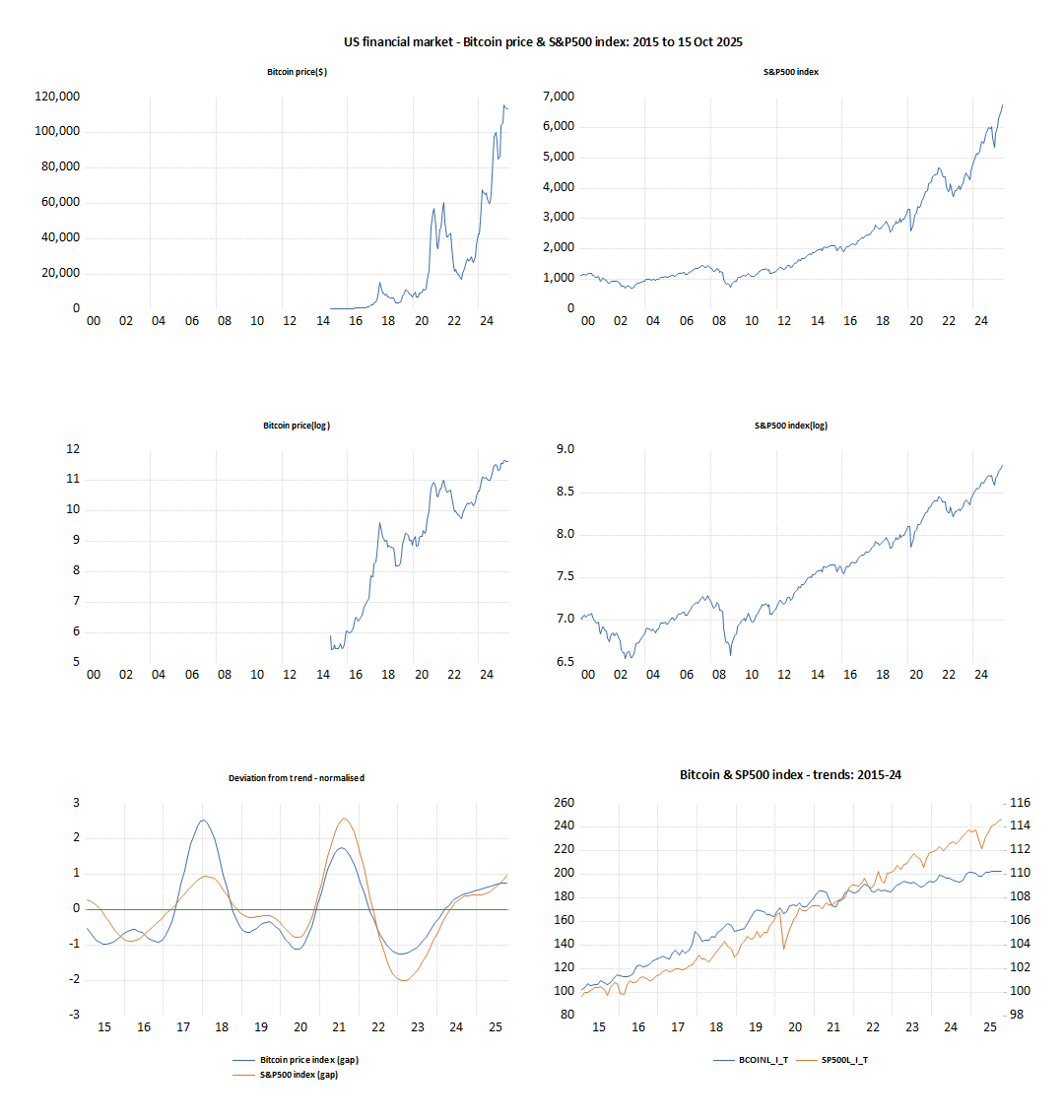
The focal point on the global economic scene during the third quarter, was the impact of Trump’s tariff policy, following the reprieve of 90 days from its announcement on 2 April. International investor confidence and financial markets in general recovered. Furthermore, the Trump campaign faced intensified internal opposition. Almost unphased, the US economy remained resilient. Growth in real disposable income sustained spending on services and therefore economic growth. Retail sales and manufacturing output volumes are cyclically under pressure, but the negative output gap is bottoming out. Non-farm payroll growth has tapered significantly.
Growth is gradually receding and inflation remains uncomfortably high (also impacted by the tariffs). The world economic outlook did not change meaningfully during the third quarter. It remains evident that trend growth is under pressure. The soaring precious metal prices reflect the levels of sustained geo-political uncertainty. On the upside, the productivity benefits of the AI revolution in particularly the financial services sector, where economic buoyancy prevails, underpins economic growth.
This may not be strong enough in preventing the major industrial economies slowing down over the short-term. Interest rates are likely to become more accommodative, less so in the US. The US dollar has been stable, with its strength bolstered by tenuous international investor appetite. The risk of a US recession, with a spillover effect to non-US economies, remains. Even though the Bitcoin price has receded significantly (signaling unease in the financial markets), the combination of the difficulties for the Trump campaign and the impact of tariffs being absorbed, it may be fair in concluding that the global economic outlook brightened.
“When you adopt a cyclical worldview, your outlook will be in the minority whenever the chance of an economic turning point is high”
Achuthan & Banerji