

THE SA ECONOMY STALLS AMIDST DEEP CRISIS, 25Q1
The second quarter of 2025 was eventful, with crisis developments of historic proportions. It spans the 90-day waiver regarding the trade tariffs announced by President Donald Trump on 2 April, sending shock waves across the globe. Domestically, the GNU teetered on the brink of collapse as Budget 3.0 (to be implemented, 31 May) was deliberated by the coalition partners.
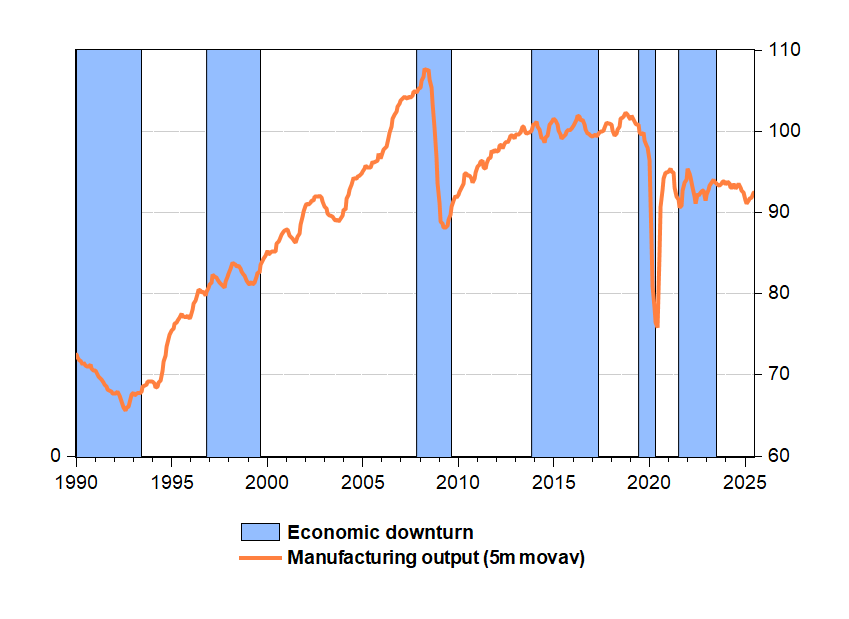
Financial markets reacted sharply, first a steep fall with the tariff announcement and thereafter an even stronger rebound. The crude oil price also fell sharply. Both local and global PMIs indicated that industrial production was in contractionary territory.
It was sad contemplating that the blossoming consumer-led recovery following the outcome of the 2024 national elections and the formation of the GNU on 19 June, losing momentum – 25Q1 GDP growth came in at 0.1% and high-frequency economic indicators, including business and consumer confidence, dipped notably, 25Q1 & Q2.
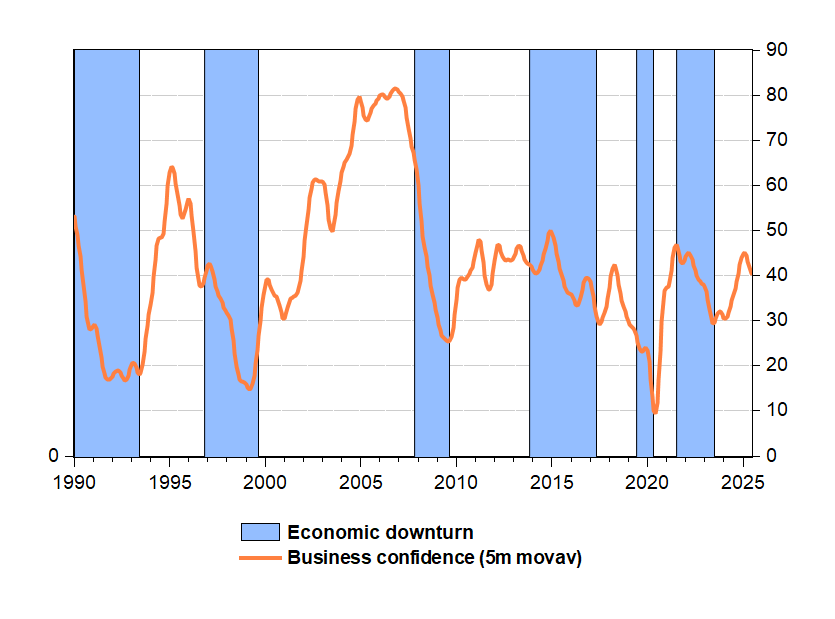
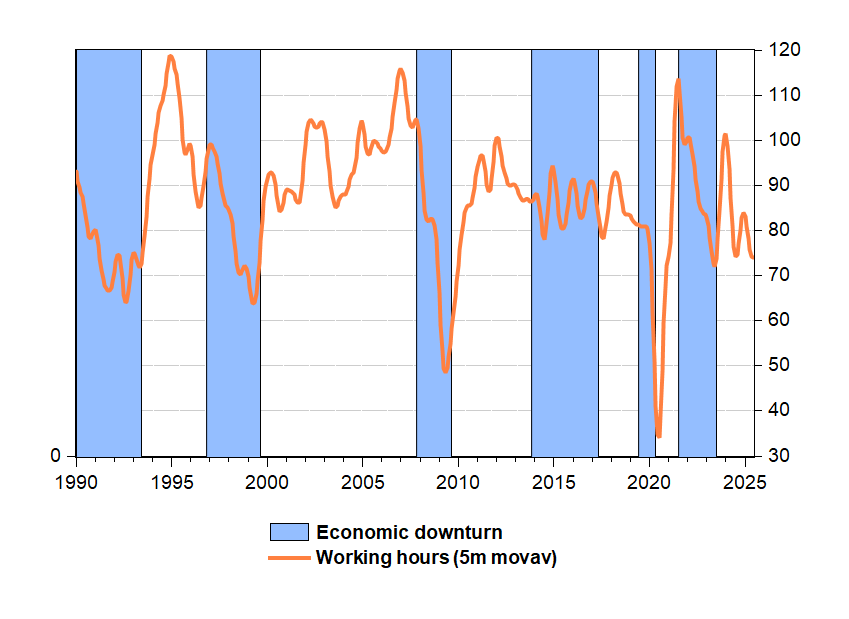
Real GDP growth was exclusively driven by a strong recovery in agricultural GDP, expanding by 12% during 25Q1 and being up 6.6% (year-on-year) and 29% compared to the pre-coronavirus pandemic levels.
The growth in the services sectors disappointed, with financial & business services being flat (0.1% quarter-on-quarter). It has been the major post-covid growth sector, with its level close to 14% up. Personal services (9.4% up compared to 2019 levels), contracted marginally in 25Q1.
Government consumption has been under pressure owing to precarious fiscal conditions that ensued during the pandemic crisis, also contracting marginally in 25Q1.
Real manufacturing, water & electricity and construction GDP is down 2%, 2.6% and 3.7% respectively in 25Q1 and is 9%, 9.4% and 28.7% beneath pre-covid levels. Real private fixed investment spending is 16.3% lower compared to 2019 levels.
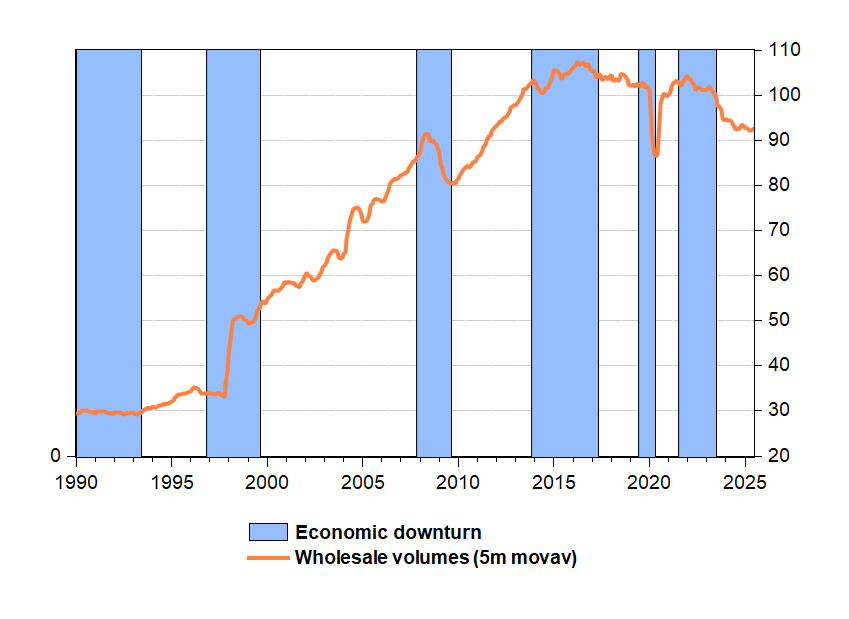
In all, the tertiary sector expanded by only 0.3% as did the retail, wholesale & accommodation sector. This reflects the pattern of economic growth – insufficient demand to boost business confidence. Demand is insufficient owing to serious constraints in the secondary sectors of the economy where upskilling of labour and employment creation must occur.
Suffice to conclude that the post-election economic recovery is subject to immense inertia. Broad real domestic expenditure is up 0.5% (25Q1), 1.5% (year-on-year) and 1.3% (compared to 2019 levels), with net exports adding to this modest expansion, resulting in 0.5% real GDP growth (year-on-year) and 2.1% (compared to 2019).
In sum: the business cycle
The formation of the GNU (June 2024), the associated lift in business and consumer confidence and the improvement in retail, wholesale and vehicle sales towards the end of the year brightened the outlook. Structural reform is also gradually swinging into action, but the second quarter was met with turbulence of historic proportions.
It witnessed a sharp reaction in financial markets, reacting to the unleashing of an almost unprecedented global tariff war and, domestically, an existential crisis in the GNU around the 2025/26 national budget. SA’s incremental growth path became doubtful and will remain in the balance given the scope of ongoing structural change, both abroad and locally.
The recovery in international markets was swift but geo-political tensions remain highly strung. Developments during 25Q2 sobered expectations regarding the world economic outlook – with economic growth expected to proceed beneath trend levels.
Domestically, the demand-side of the economy weakened, 25Q1. A strong recovery in agriculture provided a countervailing impetus and the economy is still underpinned by resilience in real domestic spending. Net exports have become a drag on growth. A recovery is shaping up in the civil construction sector providing a reliable indication of structural economic reform policies gaining traction.
SA’s growth strategy in the macroeconomic department, needs to be complimented by active industrial policy at the sectoral and regional levels. This is expected to sustain growth and employment creation, generating much-needed business cycle momentum. The SARB announced the consideration of a 3% inflation target in May creating a building block for macroeconomic prudence, with the National Treasury likely to formalise this initiative. The first half of 2025 was some setback, but expectations have adjusted and the outlook remains for incremental growth over the short- to medium-term.
US ECONOMY – AN EXTRAORDINARY THREE MONTHS, 25Q2
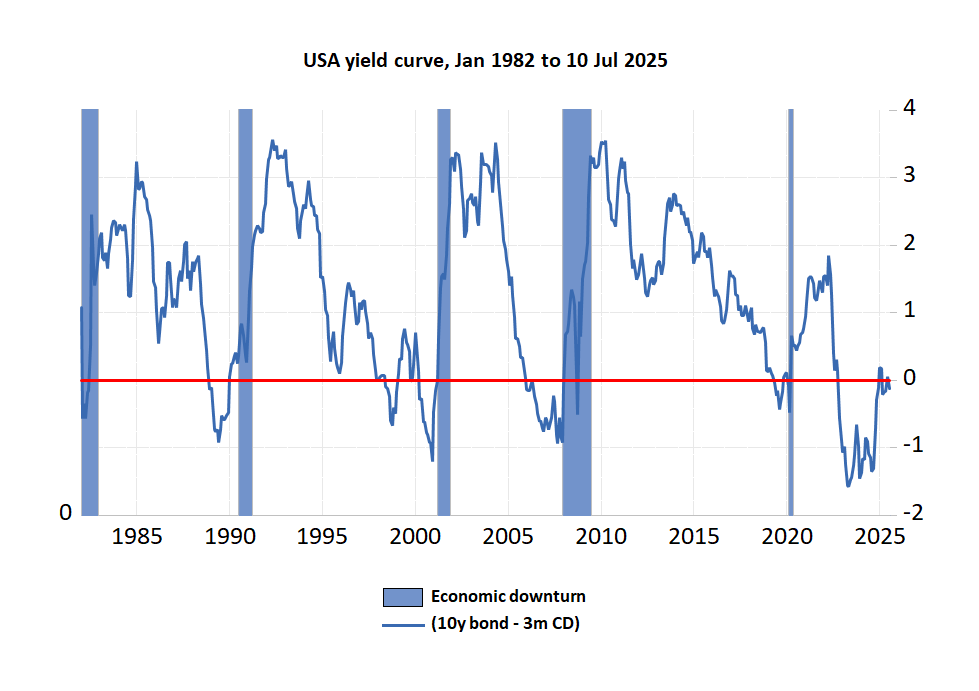
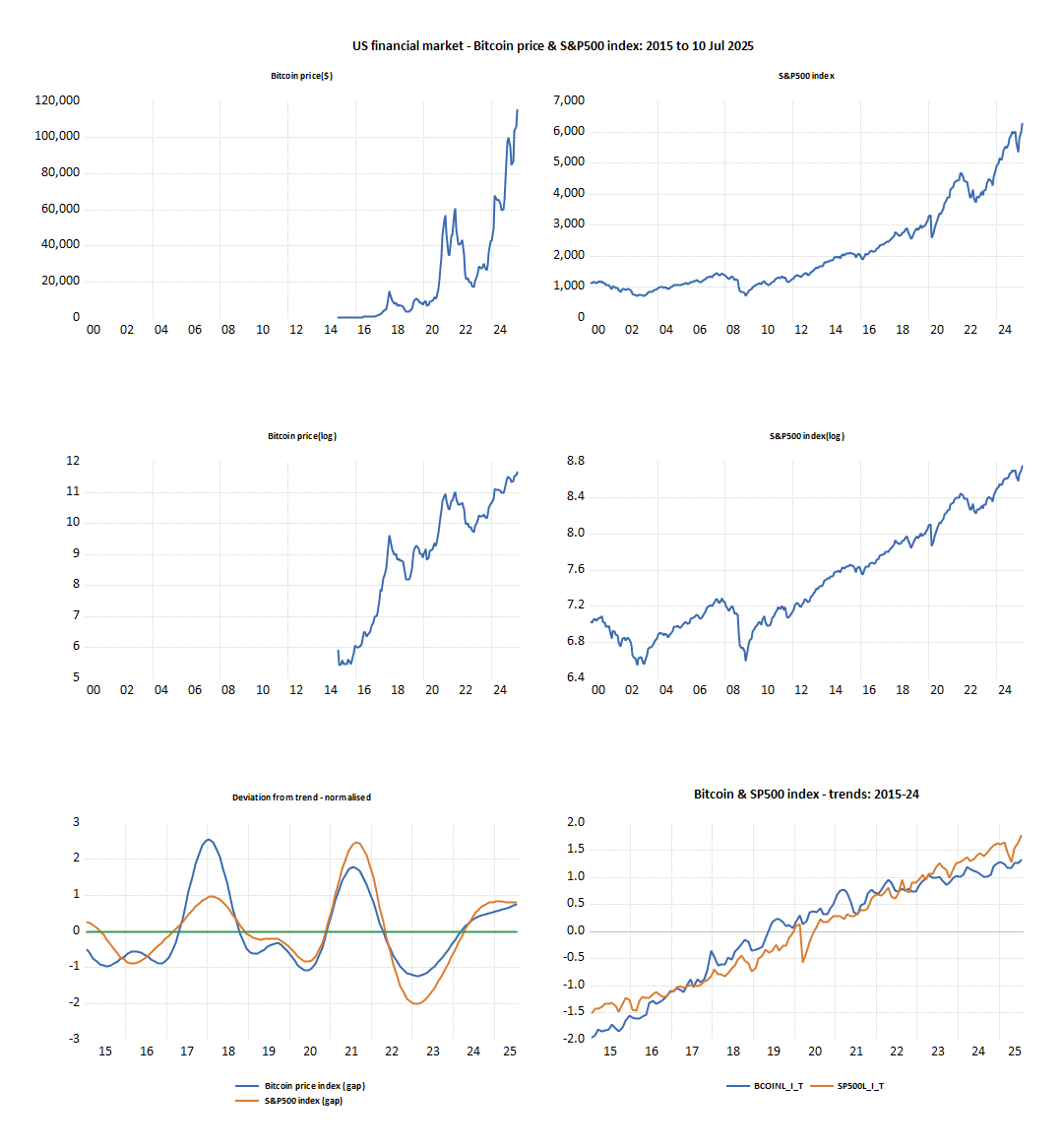
The second quarter of 2025 was an extraordinary three months. Initially shaken by President Trump’s tariff announcement (2 April), stability swiftly returned with the announcement of a 90-day pause. Yet, if anything, levels of uncertainty (and tension) deepened from already radical dimensions, best reflected in a soaring gold price.
Whereas the latest global events sparked explosive centrifugal forces, counter-balancing developments in the US are interesting. At times of deep structural change, the business climate tends not to be conducive to growth. A world embarked on an energy transition for a sustainable future, requires that centripetal forces triumph.
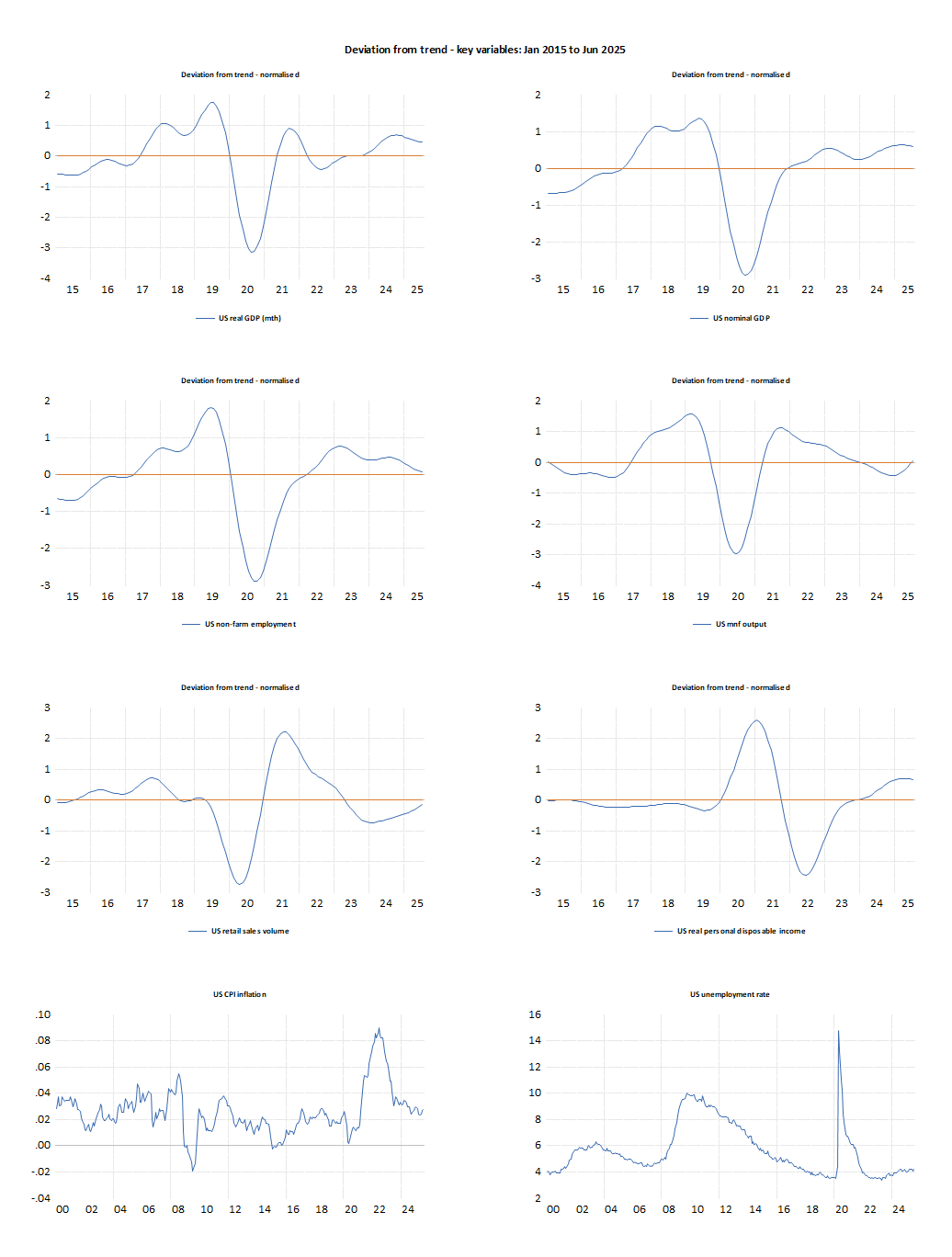
In the major industrial countries, spending on services, underpinned by the productivity gains associated with AI, remains the source of economic resilience. US growth and employment creation are tapering but is not falling off a cliff. The June economic indicators showed marginal improvements in a range of countries, with the contraction of industrial production easing.
“When you adopt a cyclical worldview, your outlook will be in the minority whenever the chance of an economic turning point is high”
Achuthan & Banerji