

SA ECONOMY EXPERIENCES AN UNTIMELY SETBACK, 22Q2
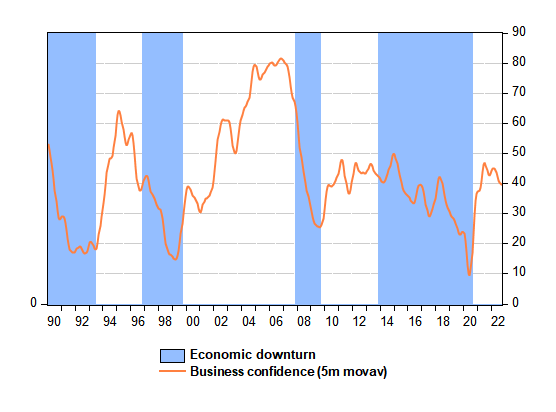
SA’s real GDP declined again during the second quarter, countering the welcome boost during the first quarter. GDP contracted by 0.7% (quarter-on-quarter), with the level of GDP now 0.3% below its 2019 pre-covid level. The contraction is partly a result of the serious flood damage in the KwaZulu-Natal and Eastern Cape provinces during the second quarter. It is also a result from intensified electricity load shedding from April, as well as poorer growth in some sectors. Business confidence edged lower.
Only two of the broad sectors registered growth quarter-on-quarter, namely transport & communication services, and financial & business services. Both sectors grew by 2.4% and are around 5% up year-on-year (and close to 10% above pre-covid levels). Within the former-mentioned sector, it is likely that communication services are the big drivers of growth.
The roll-out of fibre internet connectivity, activity related to the recent auctioning of radio spectrum (March), and the broader technological changes are all growth factors in the sector. Furthermore, financial deepening continues to be a structural growth driver in the financial services sector.
All the other sectors witnessed contractions during the second quarter. The contraction in agriculture was particularly large (7.7% quarter on quarter). Given the growth in the sector during the pandemic, the level of agricultural GDP is now more than 20% lower compared to year-ago; however, it remains close to 12% above pre-covid levels. The quarterly contraction in the secondary sectors (manufacturing, water & electricity, and construction; 11%) is shocking and explained by the electricity shortages, labour unrest as well as the regional flooding.
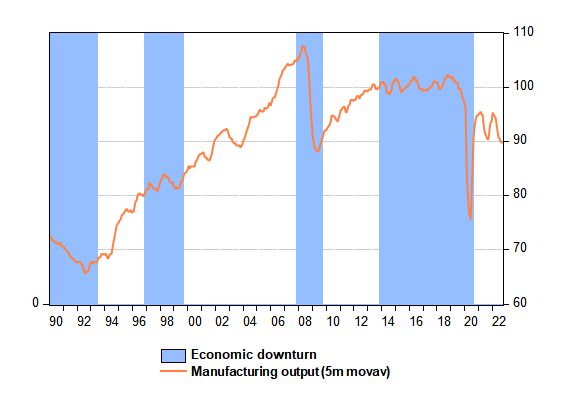
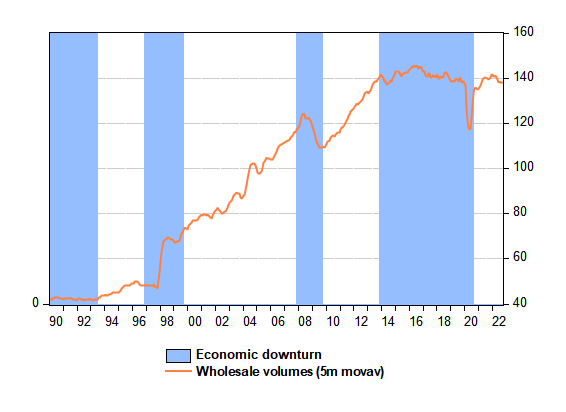
Construction real GDP is 25% below its pre-covid level; mining and manufacturing around 9% and both retail, wholesale & accommodation, and transport & communication 4-5%. Manufacturing activity declined precipitously by more than 21% during the second quarter.
The contraction in sectoral economic activity is of great concern from a cyclical perspective. The broader economy is on the mend following the easing of COVID-19 related restrictions. On the demand side of the economy this recovery is characterised by shifts in consumer spending and improving business conditions in the retail and wholesale sectors; real household spending is up 2.4% on pre-covid levels. However, we are faced with supply-side constraints, and this is shaping the business cycle. An important driver of the business cycle is fixed investment, and its recovery continues to lag (being measured close to 11% below pre-covid levels in 22Q2).
In sum: the business cycle[1]
Real gross domestic spending – the broadest measure of demand in the economy – is at its pre-covid level. Unfortunately, much of the increased domestic spending is on imports, which jumped by 5.6% during the second quarter. The improved domestic demand therefore does not fully benefit the production sectors. This may be related to infrastructure and other supply-side constraints, which require urgent policy attention.
In all, the second quarter GDP results were disappointing. The recovery from the pandemic impact needed to broaden. While this remains on the cards, the second quarter represents a serious setback. In view of developments abroad, notably the impact of the Russian-Ukraine war, the dramatic increase in global inflation, led by sharp spikes in energy and food prices, and the sharp increase in global short-term interest rates, the loss of momentum could hardly have arrived at a worse time. A global recession is shaping up and this will (and is having) spill over effects on SA.
A global recession shaping up…
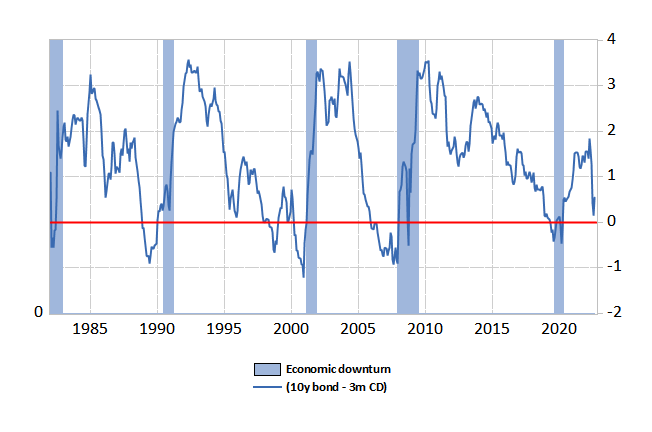
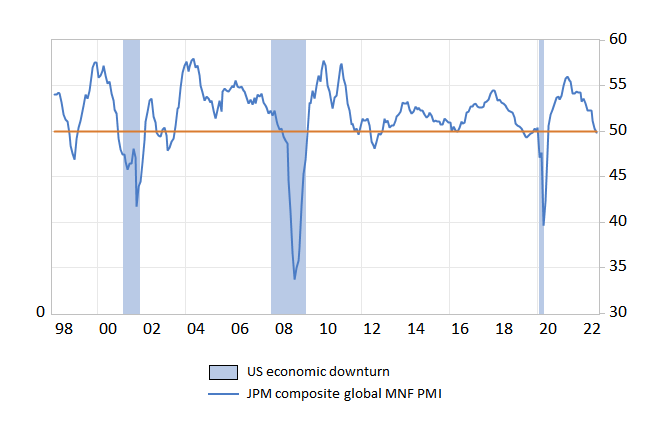
Two powerful indicators show that the global economy is on the verge of recession (see charts). Firstly, the US yield curve is about to invert as the US bond market senses recession in the wake of the Fed’s monetary tightening – 350 bps in the interest rate up-cycle thus far. Each time that the yield curve inverted over the past 40 years, the US experienced a recession a few months later. Secondly, witness the correlation between global recessions (indicated by the JPM composite manufacturing PMI dipping beneath 50 index points) and US recessions (the shaded areas in the second chart). The US still accounts for more than a fifth of world output.
In 2012-13 this indicator also dipped below 50 index points when the EU entered a 2nd leg of the GFC owing to its homegrown sovereign debt crisis. The then Chairman of the ECB declared that they “will do whatever it takes” to rid the region from recession. In the end, the ECB was successful, and the world did not enter a second leg of the Great Recession. The question is whether the authorities will be able to do the same with the current cost-of-living-cum-energy crisis?
While the war and its consequences for energy and food prices is a wild card, two prominent facts must be acknowledged: first, the stagflationary shock imparted by the war on top of – and exacerbating – the pandemic-induced supply chain disruptions and attending adverse price effects. Not only has producer inflation rocketed as a result, but the supply-sides of most economies took a heavy knock just as consumer demand underwent a major shift away from services in favour of goods. The increased producer costs were partly transmitted to CPI inflation. The US housing market also shows strong evidence of a shift in demand related to work-from-home adding to the lift in prices and rentals, which also lifted core CPI inflation.
Secondly, years of mis-pricing risk (zero-bound interest rates) and QE, being amplified owing to the pandemic lockdowns, in the end caused demand-side inflationary pressures. This moved inflation expectations, being dangerous. Central banks are fighting inflation not to become entrenched. This unleashes recessionary forces
Distressing business cycle outlook
It remains BCA’s view that inflation will rapidly recede, domestically and abroad, in the coming months and that disinflationary rather than inflationary worries will be on the cards in the not-too-distant future. The war and energy crisis/transition remains a wild card.
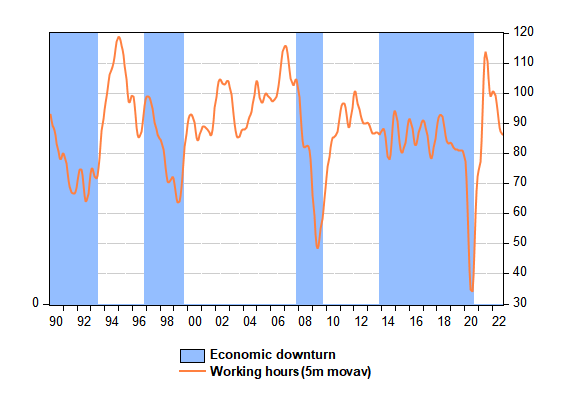
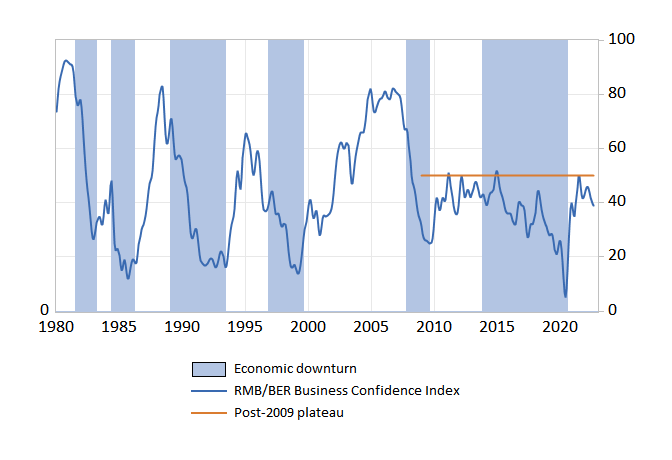
The BER’s recession-dating algorithm reveals worrying tendencies – manufacturing output volumes, capacity utilisation and working hours are all embarking on their erstwhile pre-covid downward tendencies. Given the serious level of load shedding during the third quarter, not to mention the impact of the global recessionary forces, rising input costs and monetary tightening, the outlook is distressing.
The mining sector is also impacted as are other key sectors such as transport services. Business confidence continued to edge lower during the third quarter and consumer confidence prevails at historical low levels. Countering these adverse tendencies, is resilience detected in other services (e.g., accommodation, business services and real estate). Given the size of services activity in GDP (around two-thirds), this resilience will limit the downside.
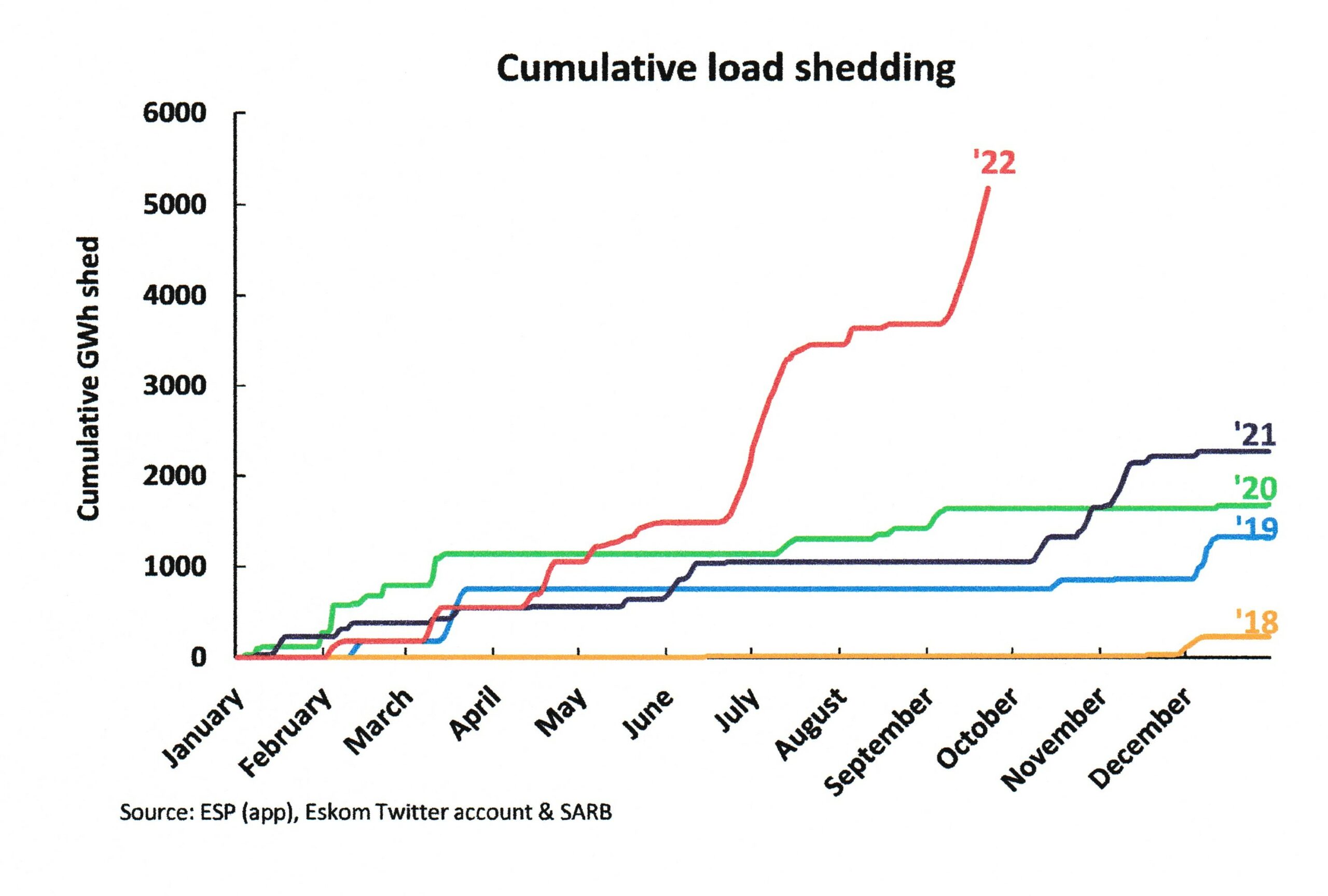
As noted in the previous note, the economic outlook is clouded by adverse developments. The second quarter contraction in GDP disappointed on-top. The further (dramatic) deterioration in Eskom’s energy availability during the third quarter (see chart), the ongoing cost-of-living crisis, labour market tensions, and tighter monetary policy are all likely to erode business, investor, and consumer confidence further and constrain economic growth. The uncertain socio-political climate adds insult to injury.
The implication for the business cycle outlook is bleak. Instead of a vigorous post-COVID economic recovery, driven by entrepreneurial flair and renewed energy, the economy may be reverting to its pre-COVID downward trajectory. While there was evidence of above-trend growth (2nd half of 2016 to mid-2019), it may just be that the economic downturn from November 2013 has not reached a lower turning point – nine years and counting.
[1] BCA hereby wishes to acknowledge that the recession-dating algorithm was designed and developed at the BER, Stellenbosch University.
“When you adopt a cyclical worldview, your outlook will be in the minority whenever the chance of an economic turning point is high”
Achuthan & Banerji