
SA ECONOMY BACK TO PRE-COVID LEVELS; KEY SECTORS LAG, 22Q1
Real GDP received a notable boost during the first quarter of 2022. Quarterly growth came in well-above expectation at 1.9% (continuing at this pace for four quarters will deliver 8% growth). Real GDP surpassed the average 2019 (pre-covid) level. This was notably sooner than expected. It also sets the stage for business cycle expansion.
A jump in manufacturing GDP (close to 5%, quarter-on-quarter), as well as in all the services categories (1.8% growth in the broad tertiary sector), explain the recovery boost. The production boost was, in turn, driven by broad-based growth in real domestic expenditure (2.1%), as well as exports (3.9%). A recovery in employment, including wage rates being restored in the wake of economic lockdown, appear to be the main driver of the boost in spending, which stimulated production. This process needs to broaden for a general expansion to take hold.
Unfortunately, growth was uneven across sectors and the second quarter economic indicators suggest the momentum could remain hesitant for the time being. Fixed investment spending recovered from a low base and in some important sectors activity still lags pre-covid levels. On the demand side of the economy, fixed investment spending remained close to 11% below pre-covid levels; on the production side, the secondary sectors trail with 6.6% (construction GDP by 23%), mining by 4.7% and the transport & communications sector by 7.2%.
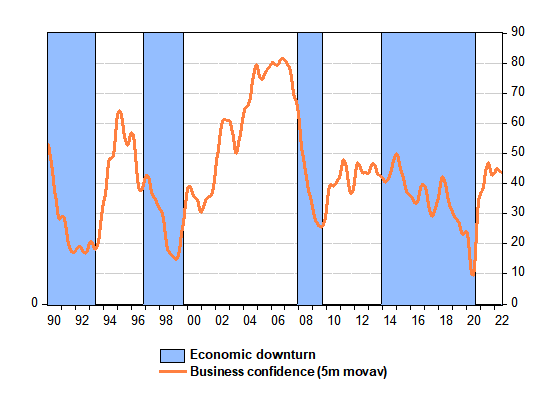
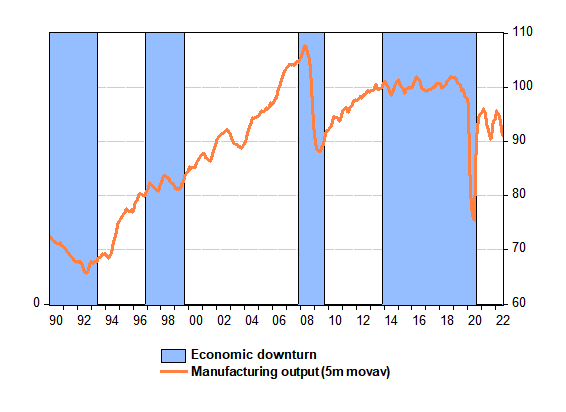
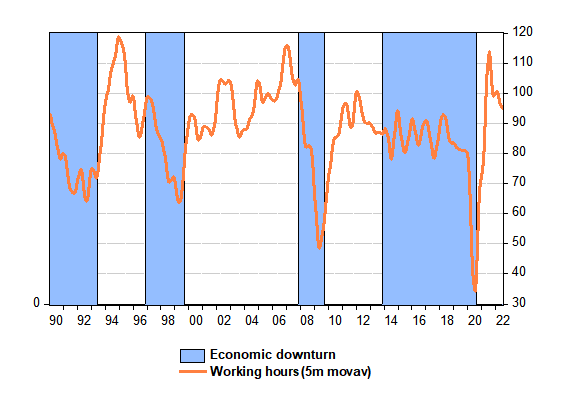
Furthermore, BER business survey results show that general business conditions deteriorated during the second quarter. The return to stage 4 load shedding, the devastating floods in KZN and the Eastern Cape, labour strikes in key sectors, input cost increases and general uncertainties affected business executives’ experience of the business climate. Business confidence declined to a level where close to 6 out of 10 survey respondents were unsatisfied with business conditions. Fixed investment intentions also took a dive and factory working hours were cut.
Economy-wide employment recovered during the first quarter. This recovery is from a low base, with close to 1.5 million jobs still to be restored post-covid. The second quarter developments put a question mark over the speed and sustainability of the recovery, and this remains the Achilles’ heel of the SA economy.
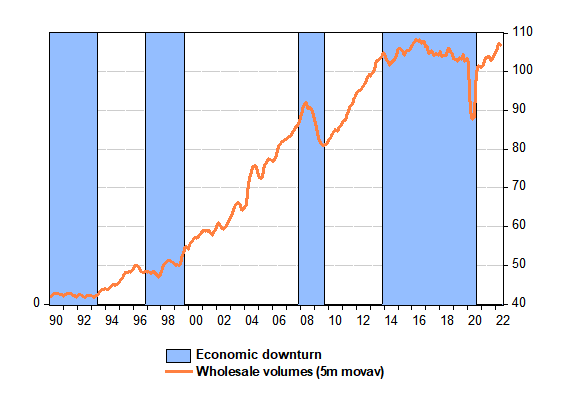
Continuing the pre-covid pattern, there appears to be resilience in the consumer sector, which spills over to the retail and wholesale sectors. Retail and wholesale business confidence remained above the post-2009 trend during the second quarter of 2022. Real household consumption has also recovered to a level 2% above pre-covid. This expansion is heartening; however, the problem is on the supply side. Confidence and fixed investment are lacking and therefore employment creation. Without employment income creation, sustainability will remain a question mark. General uncertainties and the hikes in interest rates also preclude increased household credit utilisation.
World economic growth forecasts are also being scaled down. This suggests that export demand will come under pressure. In all, the business cycle outlook does not appear rosy.
In sum: the business cycle[1]
With business confidence tapering during the second quarter, the SA economy remains trapped in an undesirable position. Adding insult to injury, global demand conditions are also set to cool down in the face of sharply higher prices for key commodities and tighter monetary and fiscal policies in the advanced economies, with the authorities responding to an uncomfortable inflation shock.
The high commodity prices, particularly that of food and energy, have a damaging impact for importing countries. Food and fertilizer prices have been kicked up as a direct result from the war in the Ukraine. The inflation tsunami has already ignited a range of central banks tightening monetary policies. How these will play out and spill over to EMs will be keenly monitored over the short term. SA prime rates have been increased by a cumulative 125 basis points since November 2021.
On the positive side, high commodity prices (e.g., that of gold, coal, copper and PGMs) have been an important support to the SA economy via the trade channel over the past two years. The recovery in exports (close to 4% above pre-covid levels in 22Q1), the current account surplus, the relative stability of the trade-weighted rand in the face of a strong dollar, supporting a favourable relative inflation performance compared to our traditional trading partners and a fiscal boost, reflect this. Credit rating agencies have acknowledged this resilience and changed their ratings outlook from negative to positive.
Whilst SA’s asset markets have been impacted by the meltdown in the developed countries’ equity markets, they have generally held-up well compared to other emerging market economies. Whereas some commodity prices have corrected (e.g., iron ore and platinum), there appears to be scope for additional commodity support as developed countries retool their economies to comply with green requirements.
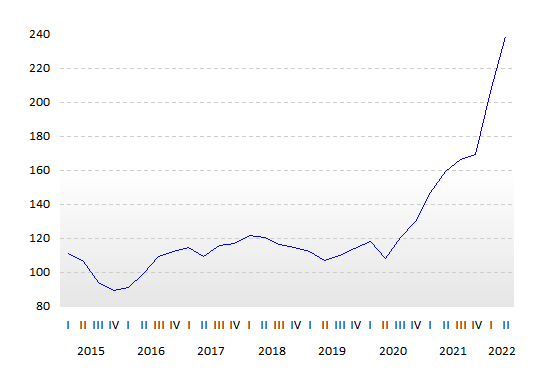
High commodity prices and the global spike in inflation are central to the business cycle outlook. Key is how inflation expectations react to the spike as this will drive Fed decisions regarding the level of the interest rate. Economists at the St-Louis Federal Reserve calculated that when USA manufacturing PPI inflation over the period January to November 2021 is normalised in respect of typical delivery periods (in other words normal supply chain pressures), it could have been lower by as much as 20 percentage points[2].
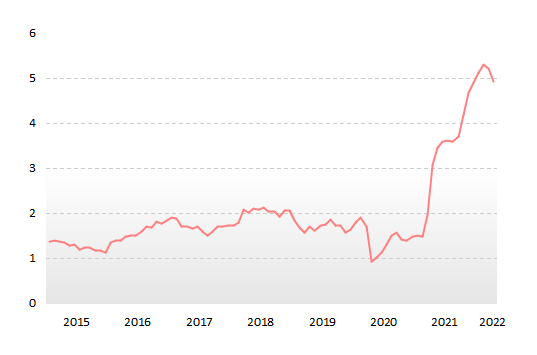
Only assuming a 30% pass-through to consumer inflation (excluding the impact of higher food and energy prices), the full four percentage points spike is accounted for. This is a fundamental point regarding the current increase in inflation. It also explains the global dimension of the spike in inflation – little to do with national demand pressures. It is also heartening that the spike in the US PCE deflator (excluding food & energy) appears to be peaking (see chart).
The implication is that most, if not all, of the current spike in non-food and energy price inflation may disappear over a 12–24-month time horizon. Increasing interest rates aggressively in this context would be misguided and the Fed is unlikely to do so. While some further increase in interest rates is likely, possibly another 100-125 basis points to anchor inflation expectations and avoid high inflation becoming entrenched, current market interest rate expectations may be overdone (seeing the Fed funds rate going to 300 basis points).
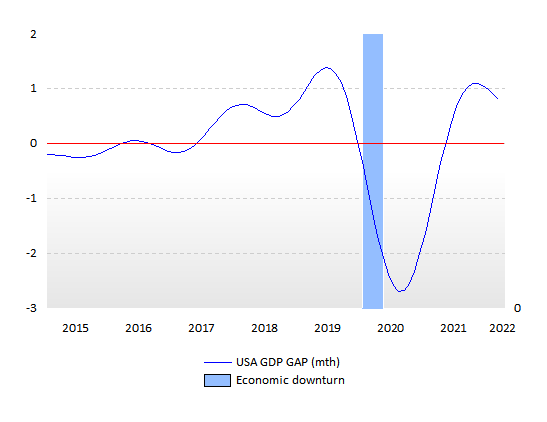
Converted to a monthly frequency, the chart shows that the US GDP growth cycle may have peaked. In view of the sharp increase in inflation, impacting real personal disposable incomes, and the interest rate hikes, growth is likely to soften over the months ahead. US (and global) asset markets are also very fluid – further downward corrections are possible. The softening of growth is a global phenomenon, it will release the pressure on monetary policies.
The business cycle outlook has weakened since the previous report. Production capacity utilisation is not on a level where it will stimulate fixed investment. On top of this, strong headwinds are likely to constrain expansion: the deterioration in the war-affected global economic outlook; domestic political uncertainties tied to the election of the governing party’s national leader at the end of the year; Eskom’s reduced energy availability; and potential labour market instability. These factors are likely to continue straining business confidence and investment.
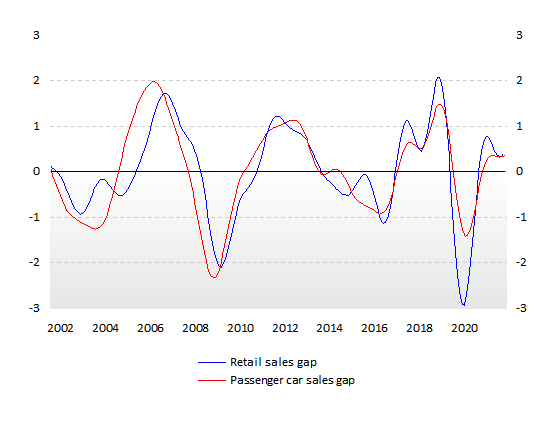
It is also difficult to foresee sustained strong expansion in real domestic spending amidst the increase in food and energy prices and general inflation and interest rates. While consumer spending and retail sales growth was strong during the first quarter of the year, there are signs of a peak in the retail cycle – see chart. On the positive side, passenger car sales – a reliable leading indicator of household spending – are holding up well going into the second quarter.
More growth needs to cumulate before fixed investment intentions will improve sustainably. Finished goods stocks are low relative to expected demand, which will support production levels, but at best, this is a short-term factor. In the fixed investment sector, a range of green energy infrastructure projects are in the pipeline. This is likely to be an autonomous growth factor over the short- to medium term.
Following the brief period of above-trend growth (2017-18), economic activity plunged during the 2020 hard economic lockdown and has recovered relatively swiftly to pre-COVID levels in 22Q1.
This recovery needs to broaden and strengthen for a more robust business cycle expansion to take hold. As noted, headwinds may be too strong for the first quarter momentum to be sustained. The likelihood is that the expansion continues at a modest and hesitant pace. This may include a quarter or two of poor growth (even contraction, e.g., 22Q2).
[2] Santacreu, A & LaBelle, J (May 2022): Supply Chain Disruptions and Inflation During COVID-19, St Louis Federal Reserve Economic Review No.11
[1] BCA hereby wishes to acknowledge that the recession-dating algorithm was designed and developed at the BER, Stellenbosch University.
“When you adopt a cyclical worldview, your outlook will be in the minority whenever the chance of an economic turning point is high”
Achuthan & Banerji