

ECONOMY REBOUNDS SHARPLY, 20Q3
The economy experienced a welcome rebound during the third quarter. Following the precipitous fall in the second quarter, when the economy contracted by 16.6% quarter-on-quarter, real GDP recovered by 13.5%. In year-on-year terms, real GDP was still 6.1% down in the third quarter. An analysis shows that a large improvement in net exports accounts for the bulk of this recovery.
This is best reflected in the fact that (the export intensive) primary sector GDP was up during the third quarter compared to levels a year ago, while real domestic expenditure was still 10.8% lower. Firstly, the agricultural sector benefited from favourable climatic conditions and was relatively less impacted by economic lockdown as it supplies the food & beverage processing sectors. Secondly, export demand recovered, in turn, fuelled by the swift economic recovery in China and East Asian countries, as well as relatively strong rebounds in economic activity in the rest of the world. The increase in key SA commodity prices and the weaker currency contributed. Thirdly, it is also encouraging to witness a positive response in the manufacturing sector, with exports recovering and importation being compressed (due to both weak domestic demand and a weaker rand exchange rate).
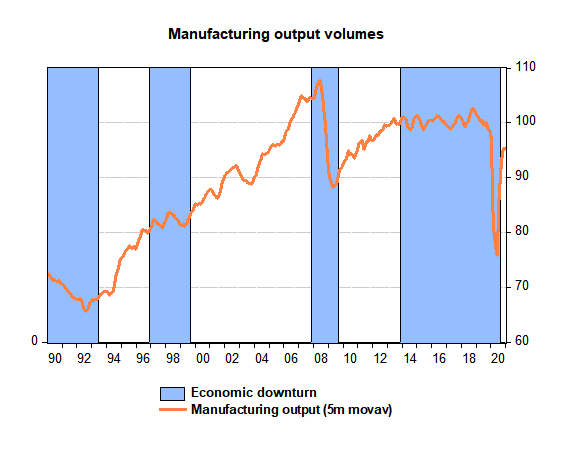
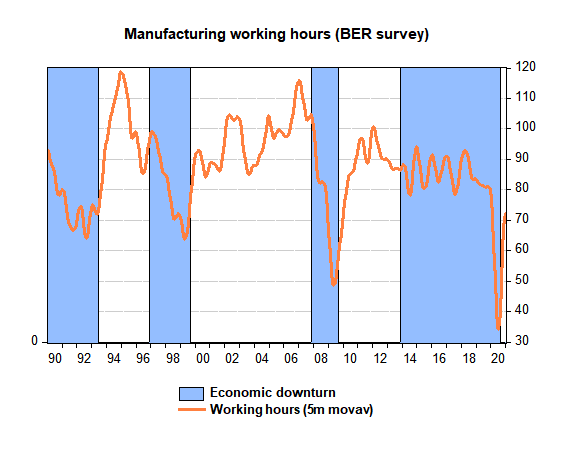
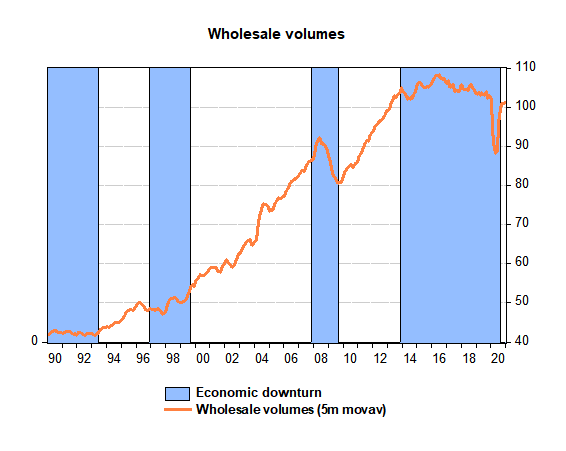
Agricultural GDP was up 15.5% during the third quarter compared to levels a year ago; mining GDP down only 3.5% and manufacturing down 8.5%. This compares to GDP levels being down 22.5% in the construction sector and 15.4% in the transport & communication sector. The services sectors were also badly impacted during the second quarter, with the rebound in the third quarter being not as strong for understandable reasons. Tertiary sector GDP contracted by 12.7% in the second quarter and only recovered by 8.3% during the third quarter.
On the demand side of the economy, it is evident that the negative impact and reason for lingering weakness during the third quarter has been fixed investment, both in the private sector and in respect of public corporations in particular. Overall fixed investment contracted by 20.4% during the second quarter and rebounded by only 6% during the third quarter; levels remain down by 21.9%, year-on-year. This compares to household spending being down only 4.9% and government consumption spending on a par with levels a year ago.
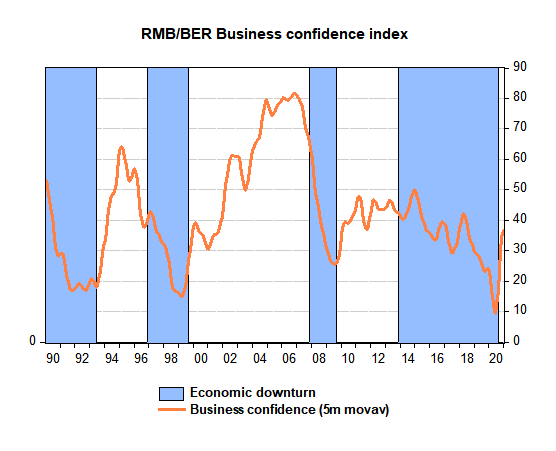
Should domestic spending levels hold up and the policy authorities be successful in stimulating infrastructure investment, it is possible to capitalise on the third quarter rebound in business confidence. The RMB/BER business confidence index jumped from 5 to 24 index points in the third quarter and then recovered further to 40 points during the fourth quarter.
Unfortunately, the outlook is clouded by the resurgence of COVID-19 infection levels world-wide and the return to (refined) restrictive measures adversely affecting economic activity. Domestically, the third quarter rebound may also to an important extent have been supported by pent-up consumer demand, which may cool down again during the fourth quarter.
In sum: the business cycle
From a business cycle perspective, it is not clear what the future holds. The current recessionary conditions are not necessarily driven by endogenous propagating forces. The latter has been eclipsed by the discrete shocks related to the pandemic impact and policy responses. The economic downturn from the end of 2013 witnessed a tentative lower turning point (LTP) towards the end of 2016. This bottoming of economic activity failed to shift into a sustained economic upturn. The algorithm suggests the economy reached a ‘downward inflection point’ in June 2018, with the lack of momentum in the economy deteriorating. This was corroborated by real GDP beginning to contract during the third quarter of 2020. By March 2020, ahead of the COVID impact, all components of the recession-dating algorithm entered recessionary territory.
This preceded the precipitous fall in economic activity during the second quarter. By the fourth quarter, there was no sign of any LTP/bottoming of the economic contraction, albeit too early to make final calls regarding the algorithm components’ movements at this stage.
“When you adopt a cyclical worldview, your outlook will be in the minority whenever the chance of an economic turning point is high”
Achuthan & Banerji