

UNPRECEDENTED PLUNGE IN ECONOMIC ACTIVITY, 20Q2
As expected, the sudden-stop in real economic activity during the second quarter of 2020 was comprehensive and actually slightly worse compared to already gloomy market expectations. Real domestic spending contracted by 13.4% compared to the first quarter. Real exports shrunk by no less than 27.9%, which was significantly worse than expected, also explaining the sharper contraction of overall GDP, i.e., 16.4%.
The export contraction is mirrored in the contraction of the mining (28%) and manufacturing (29.2%) sectors, supplying the bulk of SA’s exports, but also impacted by the domestic lockdown. As the export sector was already impacted by the global economic slowdown from end-2018, the year-on-year contraction matched that on the import side. Compared to a year ago the contraction in real domestic expenditure therefore matches that on the production side of the economy.
On the demand side, real household spending contracted by 15.8% and real gross domestic fixed investment by 20.4%. Real government spending remained flat, as did the relative contribution from inventory investment and the residual.
The only sector countering the contraction, was agriculture that benefited from beneficial climatic conditions. This sector expanded by 3.6%. The carnage in the other sectors, except public services, was dramatic – the secondary sectors contracted by 27.3% and the services sectors by 12%. Even the financial & business services sector, which has been the source of growth in the economy over recent years, contracted by a larger than expected 8.2%.
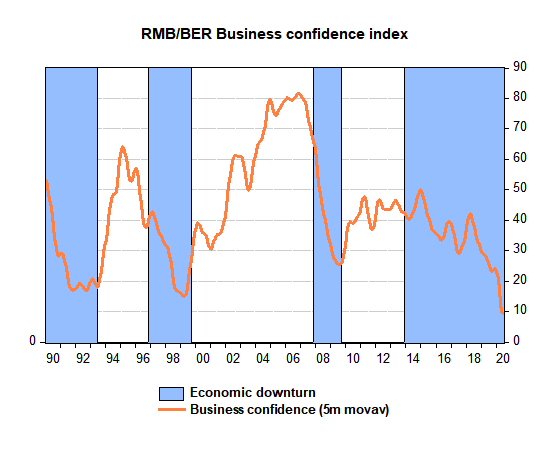

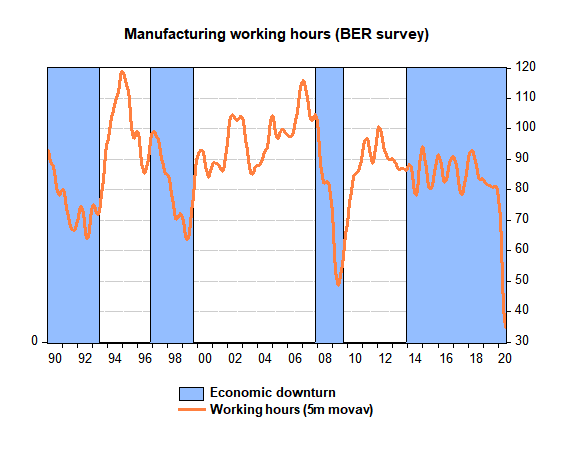
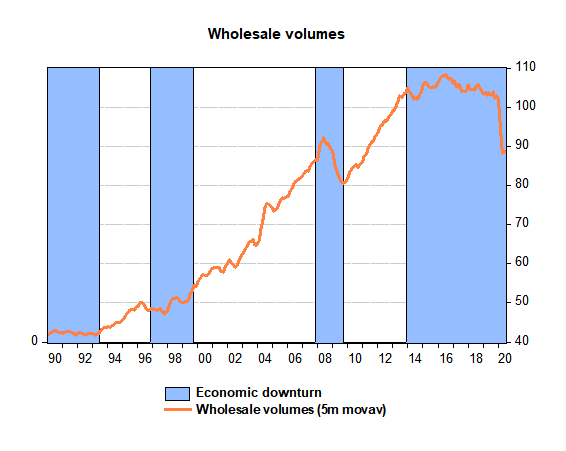
From a business cycle perspective, the anticipated recovery from this deep hole is, of course, of uppermost importance. The RMB/BER business confidence index recovered from an unprecedented low of 5 to 24 index points during the third quarter; the FNB/BER consumer confidence index receded from -33 points to -23. High-frequency data also point to a recovery in sales and business volumes as the hard lockdown measures were eased from the beginning of June. The unfortunate reality is that this improvement in activity levels falls short of expectations. This turns up the pressure to move rapidly with the appropriate macroeconomic support policies (in a fiscally sustainable way), as well as the already designed and available structural economic reforms. The silver lining regarding the foregoing gloomy picture, is the fact that the COVID-19 pandemic impact affords SA the opportunity to reset and adapt policies and approaches that will take the economy forward.
In sum: the business cycle:
The BER’s recession-dating algorithm shows that a bottoming of the economic downturn since the end of 2013 shaped-up during the second half of 2016. This failed to materialise.
From around August 2018, a clear downward inflection point was signaled and this momentum in activity levels accelerated. This resulted in economic contraction from the middle of last year and then followed the sudden-stop due to economic lockdown. The lockdown shock – paradoxically – had the potential to arrest the preceding economic slide. Public policies aimed at creating a conducive environment for private initiative and entrepreneurship, where room is also built for private-public sector participation and cooperation, are urgently required. SA has to do both it is not a matter of either/or.
Many uncertainties remain regarding the pandemic. It is now well understood that, after the initial urgency to implement economic lockdown, it had little influence on the epidemic’s trajectory during subsequent stages. The economy should be freed-up immediately so that the country can get back to work.