

ECONOMY CONTINUES TO CONTRACT, 20Q1 – BEFORE COVID-19 IMPACT
Real GDP contracted by 2.0% (annualised) during the first quarter of 2020. The overall contraction was slightly less compared to market expectations. Unfortunately, the only reason for the ‘better-than-expected’ outcome was that real domestic spending contracted substantially more than expected, dragging imports down and boosting overall GDP via a sharp increase in the GDP contribution of net exports (4.7% annualised). The fact that export volumes remained stable in year-on-year terms assisted this outcome; and on the supply-side of the economy, a boost in agricultural output.
Consumer spending, both by households and the government, also remained stable, making a marginal positive contribution to GDP during the first quarter of the year. The driver of the sharp fall in real domestic expenditure was a sustained and accelerating contraction in fixed and inventory investment, subtracting more from GDP compared to the gain in net exports. The fall in investment explains the bulk of the three consecutive quarters of real GDP contraction from the middle of last year. The economic malaise from the end of 2013 developed into a deeply worrying contraction in real economic activity leading up to the dramatic impact of the coronavirus pandemic.
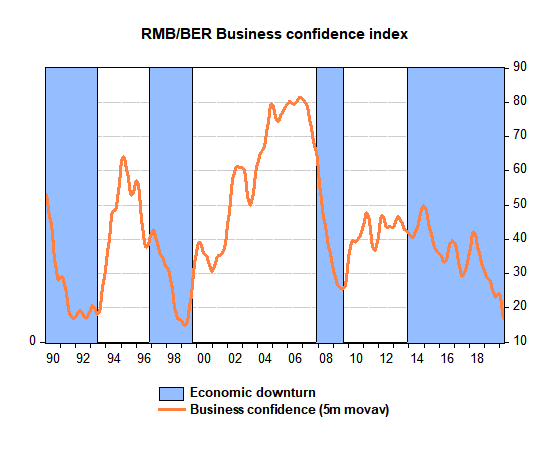
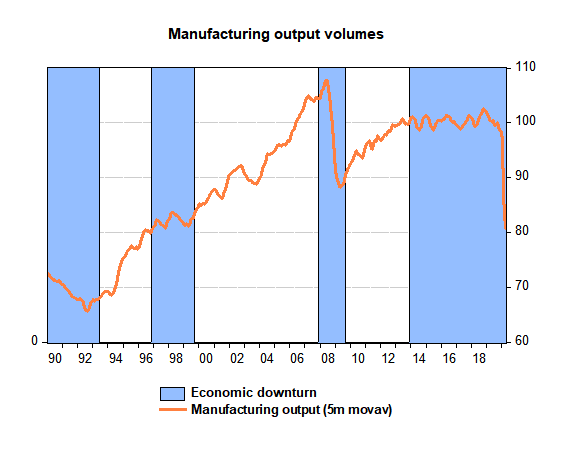
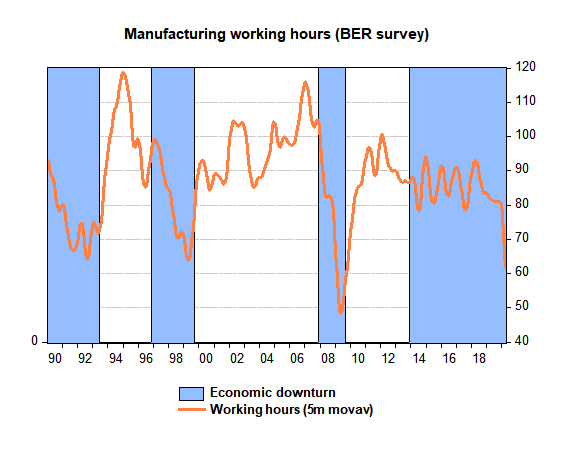
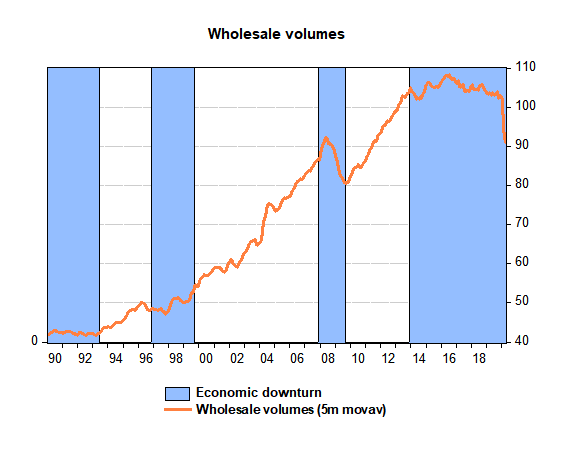
The first COVID-19 case was reported during the first week of March and the subsequent lockdown measures were implemented from the middle of March, and more comprehensively, at the end of the month. Both the government’s finances and the private sector’s balance sheets (particularly in the small enterprise sector) were, therefore, already under pressure when the lockdown hit the economy.
The second quarter economic indicators tell a sorry tale, with almost every significant index falling to historic lows. The deepest point registered through April, while some rebound was reported in May as the lockdown measures moved to level 4. The RMB/BER business confidence index fell to a mere 5 index points (unprecedented from the onset of this survey in the mid-1970s). The FNB/BER consumer confidence index fell equally sharp (to -33 points), which is close to its record low registered in the mid-1980s.
Each of real mining and manufacturing output and real retail and wholesale sales indices dropped precipitously by between 40-45% (annualised) during April. New passenger car sales came to a virtual standstill, as did many businesses in the heavily impacted services sector. This is best illustrated by the sharp fall in the business volume and confidence levels in the tourism & accommodation sector, business services, real estate and transport sectors as surveyed by the BER.
A small rebound in the aggregate services sector (1.3% annualised) assisted in containing the contraction in GDP on the supply-side of the economy during the first quarter. This surely reversed and will most likely explain the largest part of the collapse in second quarter GDP. The only sector likely to counteract the sharp falls, will be the agricultural sector, with strong backward and forward linkages in the economy. Agricultural real output jumped by close to 28% (annualised) during the first quarter and the output from the sector is expected to remain strong given favourable climatic conditions. However, even this sector has not been spared the impact of economic lockdown.
In sum: the business cycle:
The BER’s recession-dating algorithm attest to the precarious economic situation. Whereas a downward inflection point was detected in the GDP growth momentum during the early part of last year, as noted, this downward momentum intensified, developing into full-blown real economic contraction from the middle of last year. All five components of the algorithm contracted sharply during April/May and the BER survey components (i.e., business confidence and manufacturing working hours) for the full three months – see the charts. The falls are also unprecedented.
From a business cycle perspective, it is not clear how the economic recovery will shape up. This is not the typical overheating expenditure-driven economic contraction; the hit to GDP came from both the demand and supply-sides, including major disruption to value chains in the wider economy. It may even be that the ‘sudden stop’ on the supply side of the economy have a somewhat paradoxical effect in arresting the pre-COVID downward momentum in the economy. Following-up with decisive structural economic reforms, this has the potential to prepare the grounds for private entrepreneurs to drive and disperse economic recovery forces.
Unfortunately, considering the lack of cooperation amongst the key stakeholders in society, this prospect remains a challenge. It does seem to the extent that the economic reality sinks in, being reflected in the high-frequency economic indicators, that forces for cooperation are beginning to win the battle. This remains the only real prospect for economic recovery. It is quite evident, that this will be an arduous road in the years ahead.
“When you adopt a cyclical worldview, your outlook will be in the minority whenever the chance of an economic turning point is high”
Achuthan & Banerji