

SUSTAINED AGGREGATE GDP GROWTH CONCEALS UNDERLYING WORRIES, 26Q2
The positive tendency in aggregate GDP growth continued during 26Q1, with it expanding by a stronger than expected 0.5% (and 2.0% year-on-year). Year-on-year growth was elevated given the 0.4% contraction in non-agricultural GDP during 25Q1. Agriculture posted strong quarterly growth, expanding by 3.9% (and 7.0% year-on-year); this sector is 35.3% above pre-covid levels in 26Q1.
Demand conditions slowed down. Real domestic spending contracted by 0.3% following on robust growth during the preceding four quarters (3.0% year-on-year in 25Q4). The slowdown occurred in all subcomponents of household spending, but more so in spending on services which contracted by 0.3%. Private fixed investment contracted by 4.9% quarter-on-quarter, which is disappointing. The slowdown in demand was exacerbated by a sharp drawdown of inventories and is of some concern in view of the current increase in inflation and the tightening of monetary policy.
A rebound in public sector fixed investment spending (8.2% quarter-on-quarter) compensated and is heartening. This growth must be sustained. It will address the importance of rectifying the imbalance in overall government spending; government consumption expanded by 0.6% (quarter-on-quarter; and 2.3% year-on-year). Stronger public sector infrastructure spending will , in time, crowd-in private sector fixed investment (and employment growth).
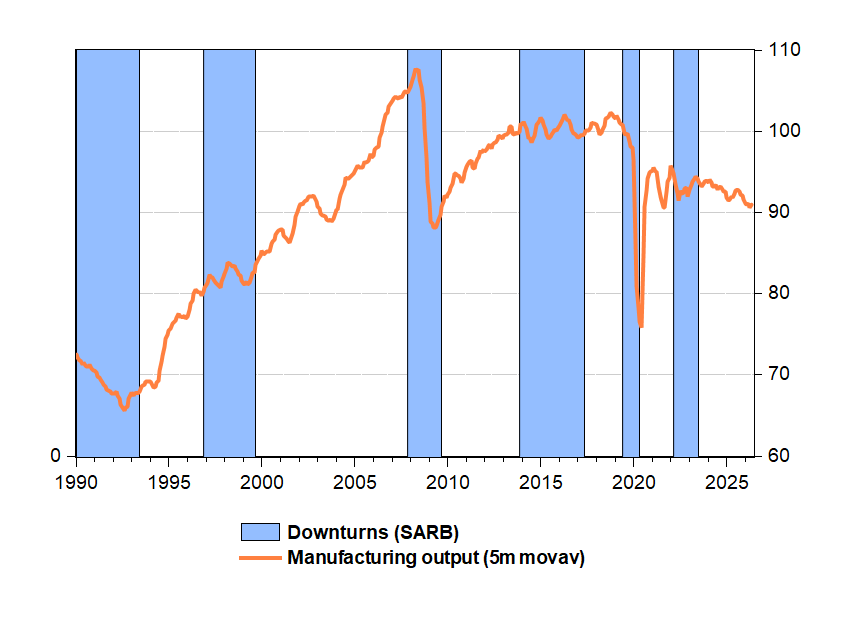
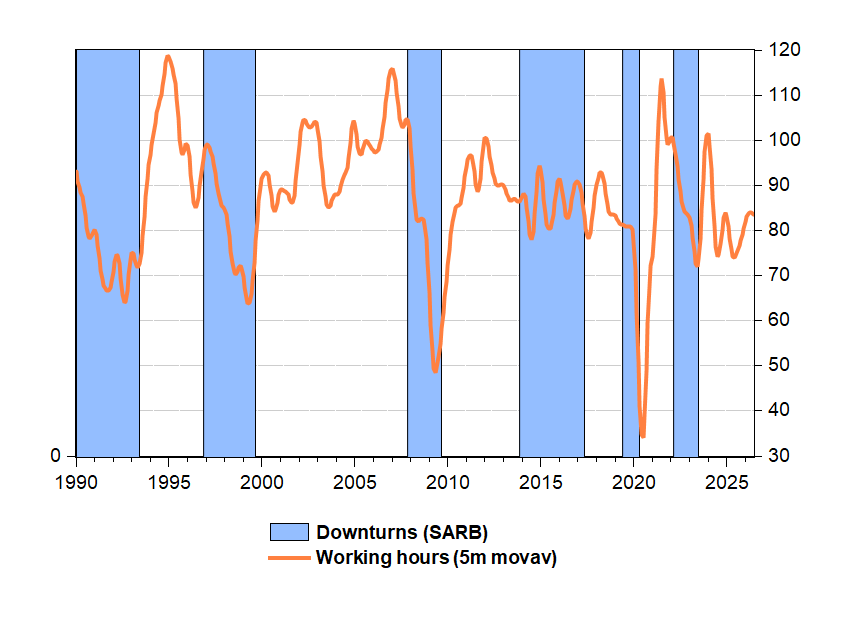
The most concerning aspect of the pattern of GDP growth remained the sustained contraction in secondary sector GDP (0.5% quarter-on-quarter; and 0.9% year-on-year). Whereas all the major sectors posted growth in 26Q1, only manufacturing contracted (0.8% quarter-on-quarter; also, down 0.1% year-on-year).
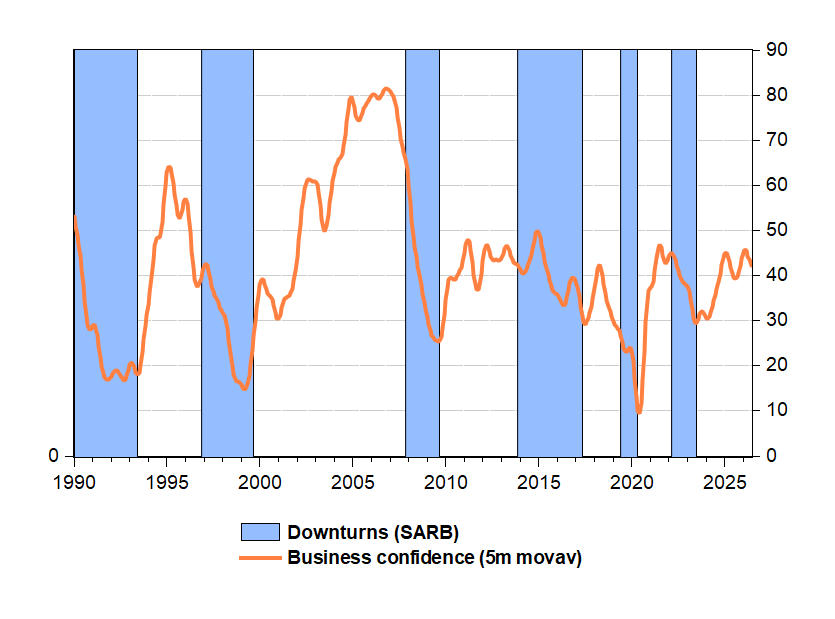
The secondary sector real GDP is 13.3% down compared to pre-covid levels. Construction sector real GDP is 30% beneath 2019 levels, suggesting much room for catchup. Business confidence declined again during the second quarter of 2026, which is concerning given the negative tendency in fixed investment during the first quarter.
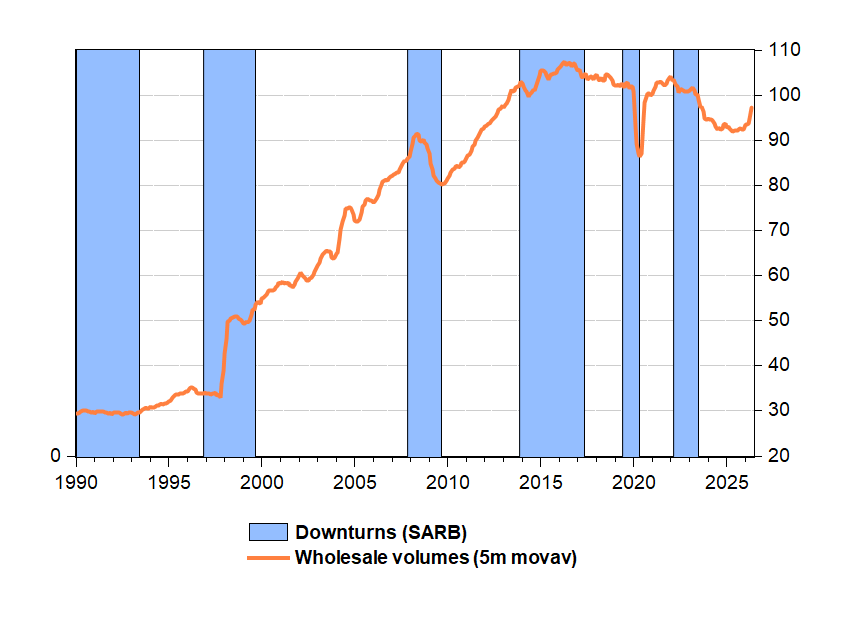
The retail, wholesale & accommodation sector has been an important support of growth and economic resilience in the wake of the GFC. The consumer sector also led the improvement in demand from the second quarter of 2025, receiving a special boost with the implementation of the two-pot pension system in September 2026.
This recovery and – more broadly – the resilience of the consumer sector is currently under pressure – retail business confidence has declined from a steady close to 50 index point level closer to 30 index points in the previous two surveys. Business witnessed an excessive inventory build-up as retail demand faded and cut back sharply from unwanted stocks, which added to the weakness in overall domestic market demand conditions. Business confidence receded and capital expenditure plans were paired back. The decline in the RMB/BER business confidence index during the second quarter of 2026 matched the increase in the index during the preceding two surveys, namely eight index points.
This result suggests that the economy is still caught in a stop-go erratic growth pattern. The uncertainty accompanying the US/Israeli war with Iran in March 2026 and subsequent increase in the oil price added to the weaker than expected domestic demand conditions. Interest rate expectations have also changed with most market participants anticipating higher interest rates for longer as the SARB is intent on managing inflation expectations in response to the supply-side oil price shock.
The broader recovery in business confidence from the lows during the middle quarters of 2023 (when business activity was seriously compromised by electricity load shedding) remains intact, which is heartening. Expectations regarding general business conditions twelve months hence remained optimistic, albeit being trimmed owing to developments during the second quarter of the year.
In sum – the business cycle
The SARB recently identified a peak in the post-covid economic recovery, namely March 2022. The BER recession-dating algorithm identified a peak in mid-2021, some months earlier and tentatively suggests the business cycle troughed again in mid-2023. These fluctuations in economic activity are difficult to measure in terms of the business cycle as they represent alternating periods of above and below-trend growth.
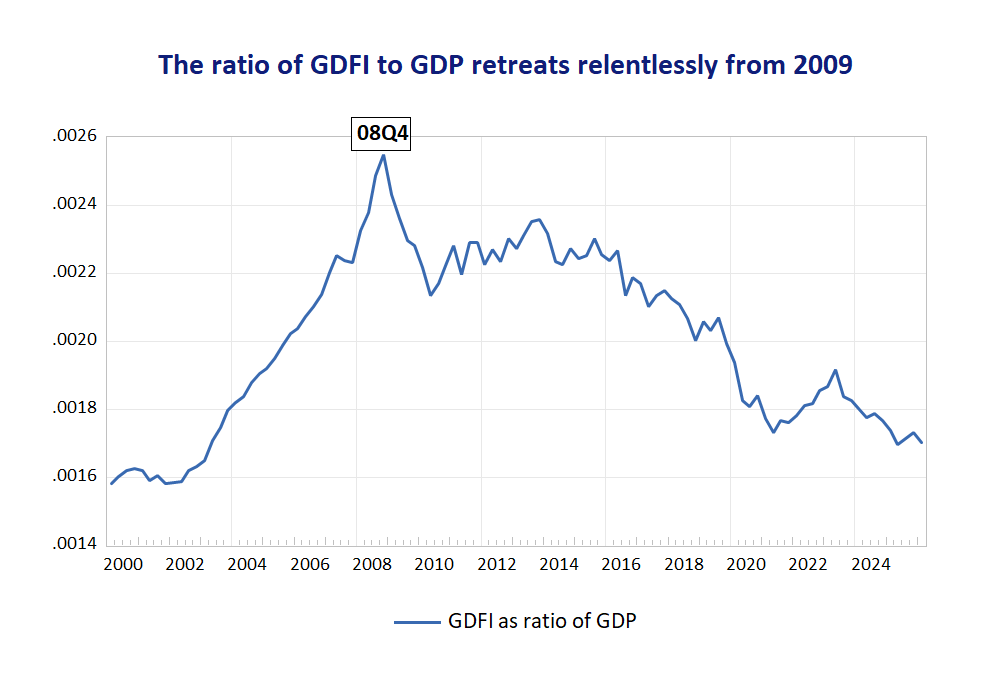
This erratic growth pattern has been characteristic of the post-2009 business cycle, with business confidence never fully recovering from recessionary periods. The ratio of fixed investment to GDP has been on a relentless downward trend from 2009. A temporary peak resulted in mid-2023 with investment in the renewable energy sector.
The underlying weakness in fixed investment spending dictates a poor economic growth environment – real GDP growth has averaged 1.1% per annum, 09Q1 to 26Q1. As of 26Q1 the economy has not embarked on a decisive break from this poor economic growth trend. Neither has there been a proper business cycle momentum (bar the 2020 covid-induced plunge and rebound). In 26Q2 less than four of every ten business executives reported satisfactory business conditions.
The recovery in demand conditions from early last year has also ran its course, without igniting a durable improvement in private fixed investment. In these conditions an economic recovery will remain dependent on autonomous infrastructure fixed investment spending in establishing a backbone for economic recovery.
From a cyclical perspective the increase in inflation and interest rates has added additional headwinds. Global growth is also expected to weaken over the remainder of 2026 and next year for the same reasons. In all, this suggests economic growth is likely to remain anaemic for the foreseeable future.
US ECONOMIC GROWTH CONTINUES TO OUTPERFORM, 26Q2
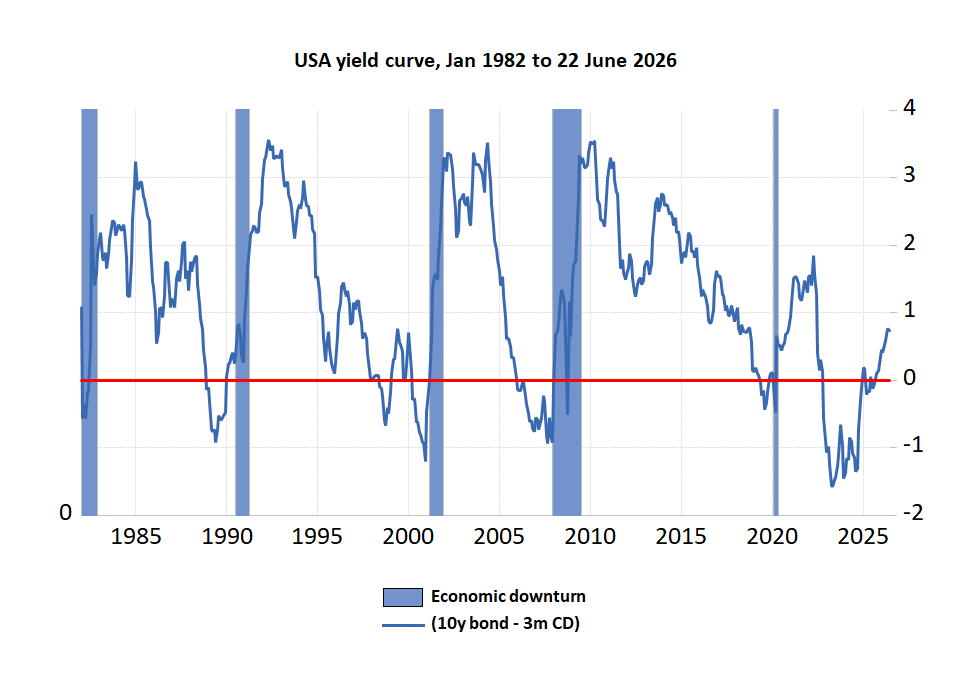
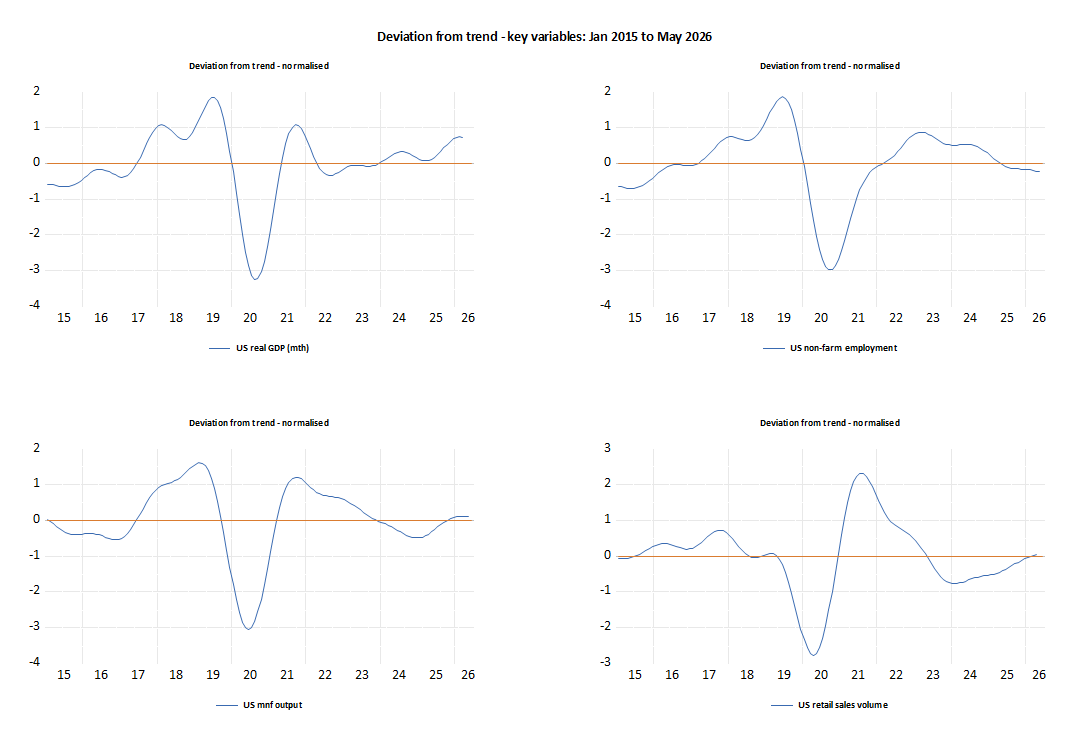
US real GDP growth has edged stronger through 26Q1, with real household spending, private fixed investment and net exports strengthening. The year-on-year momentum reached a low during the final quarter of 2025 but was again picking up speed before the oil price shock hit in March.
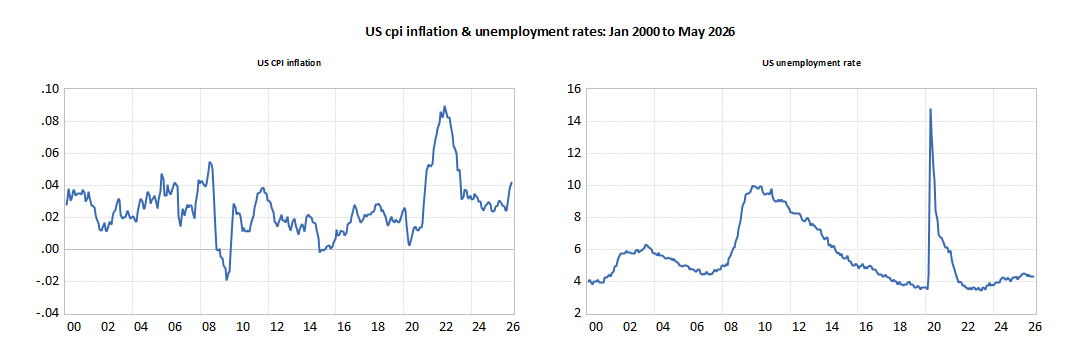
Inflation has kicked up as a result and real personal disposable income began contracting year-on-year during March and April. Consumer confidence is also under pressure. Demand for labour has picked up, which is supportive to consumer incomes should the momentum continue. US retail sales accelerated in April/May.
Oil prices have declined sharply in response to the US-Iran Framework Agreement, and it is to be hoped this will develop into a durable cessation of hostilities. The Fed – under new leadership – decided to keep interest rate unchanged in June. Given the US being a net oil exporter and the reduced oil intensity of US GDP, the impact of the (hopefully) short-lived oil spike should be absorbed in relatively good shape.
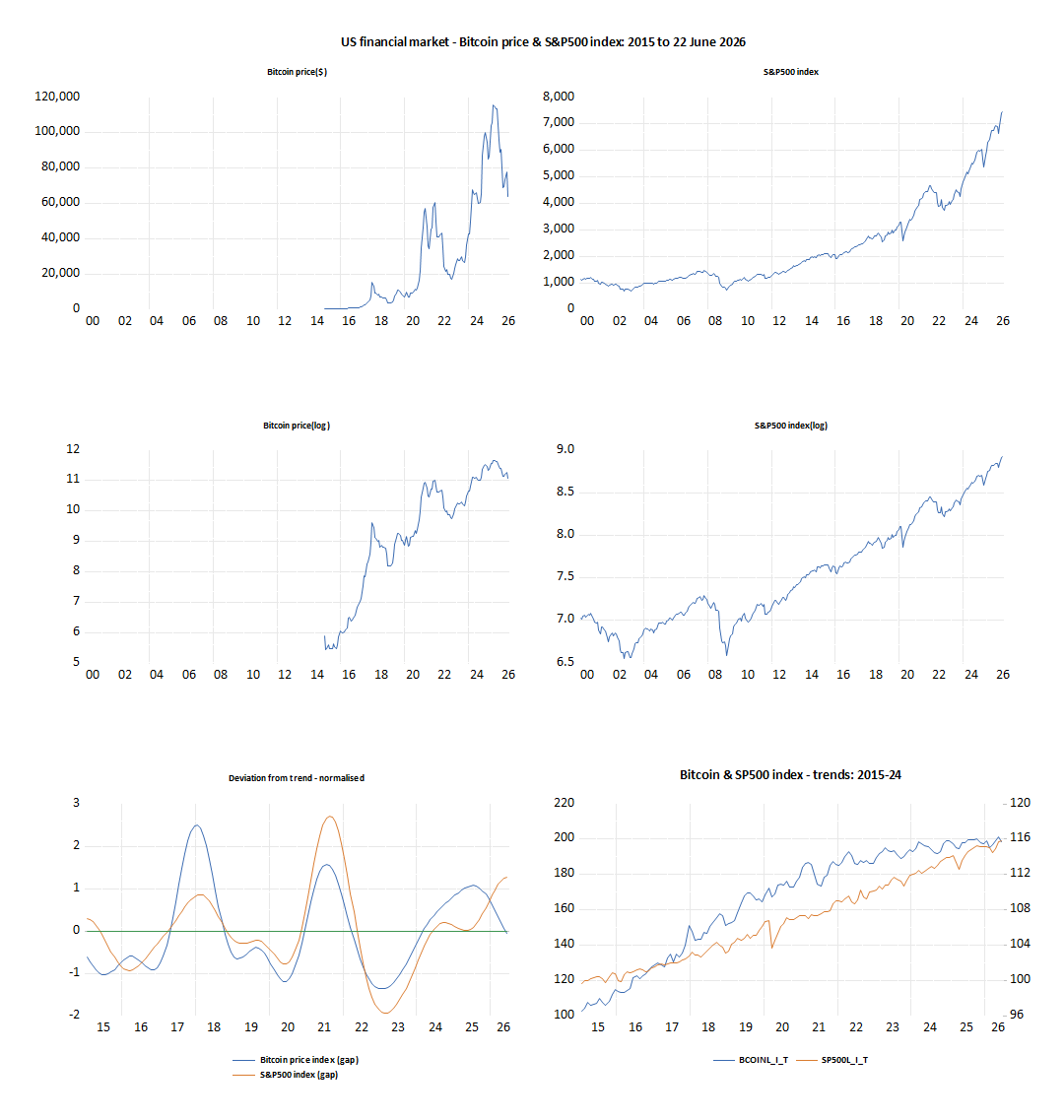
Of greater concern may be the investor exuberance regarding AI and the announced IPO’s of three of the US’ tech giants. A sharp correction in the technology sector of the US stock market has destabilising potential.
The US economic growth outlook remains more lively compared to the other major industrial countries. GDP growth is gradually slowing down in China and is under pressure in the Euro Area and the UK. The ECB has hiked interest rates, which is likely to weigh on the growth outlook. As noted, the IMF forecasts a slowdown in global growth during 2026/27, the extent being a function of the quantum and persistence of the oil price shock.
US BUSINESS CYCLE INDICATORS, 26Q2
US FINANCIAL MARKETS, 26Q2
“When you adopt a cyclical worldview, your outlook will be in the minority whenever the chance of an economic turning point is high”
Achuthan & Banerji