

SA’s ECONOMIC RECOVERY WILL BE AN UPHILL BATTLE
The current state of the business cycle is more promising than at any time the past decade. SA’s financial markets have responded positively in a meaningful way. Yet, caution is called for.
The MPC’s policy message remains unanimous not to expect rapidly declining short-term interest rates. This is positive as it will support the decline in long-term interest rates, supporting the fiscus and lowering the hurdle rate for much-needed fixed investment, driving the business cycle and employment creation.
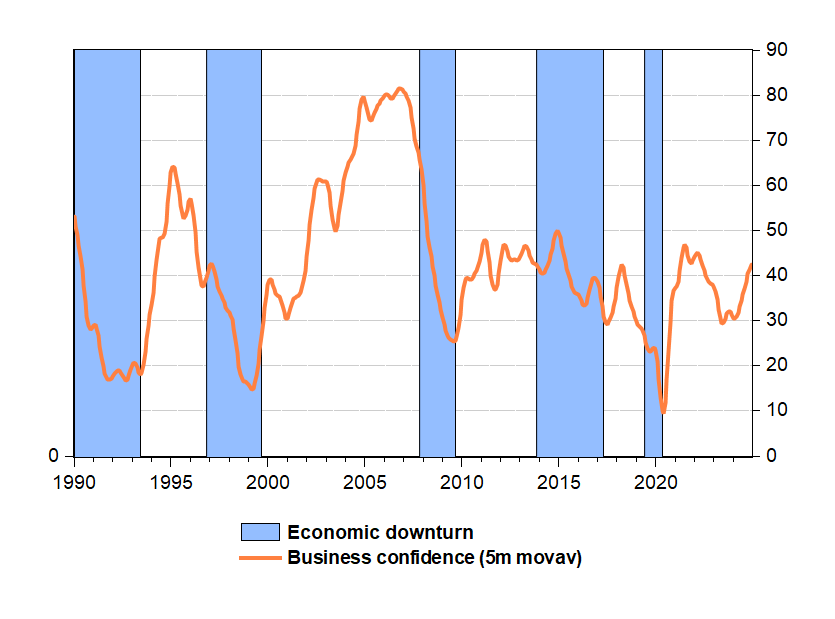
Albeit a major challenge lifting economic growth, green shoots are evident. Excluding agriculture, the modest economic momentum in 24Q2 continued during the second half of the year. Retail indicators show flattish growth, but the levels are the best in 10 years. New vehicle sales also jumped in October.
Expect incremental economic progress
The 0.3% quarterly contraction in 24Q3 GDP, announced by Stats SA, was disappointing amidst the improvement in sentiment and outlook following the formation of the GNU in June. A drought in maize-growing areas, foot-and-mouth disease in meat-producing areas and unseasonal rains took a sharp toll on agricultural output in 24Q3. Agricultural GDP contracted by close to 30% to levels last witnessed at the depth of the 2015-17 drought, subtracting 0.8% percentage points from the growth in the non-agricultural sectors.
This development overshadowed the 24Q3 GDP release. The positive aspects of the data release were the improvement in mining (1.2%) and the secondary industries (manufacturing, 0.5%; water & electricity, 1.6%; and construction, 1.1%). These industries are all more labour intensive.
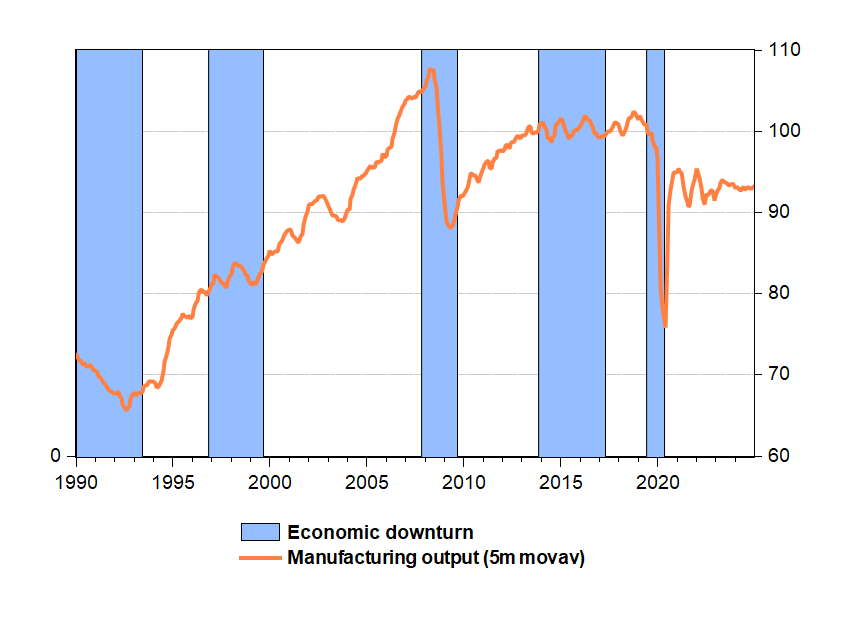
These improvements must be put into proper perspective. Manufacturing GDP is flat year-on-year, and broader Q4 economic indicators are bearish. Electricity output is recovering from the deep outages experienced in 2023, but the outlook is clouded by remaining challenges (in the maintenance and transmission departments). Building and construction activities are also recovering from deep contraction, but the outlook is more promising, given initiatives to rebuild SA’s network industries, the easing of interest rates and a revival underway in the property sector.
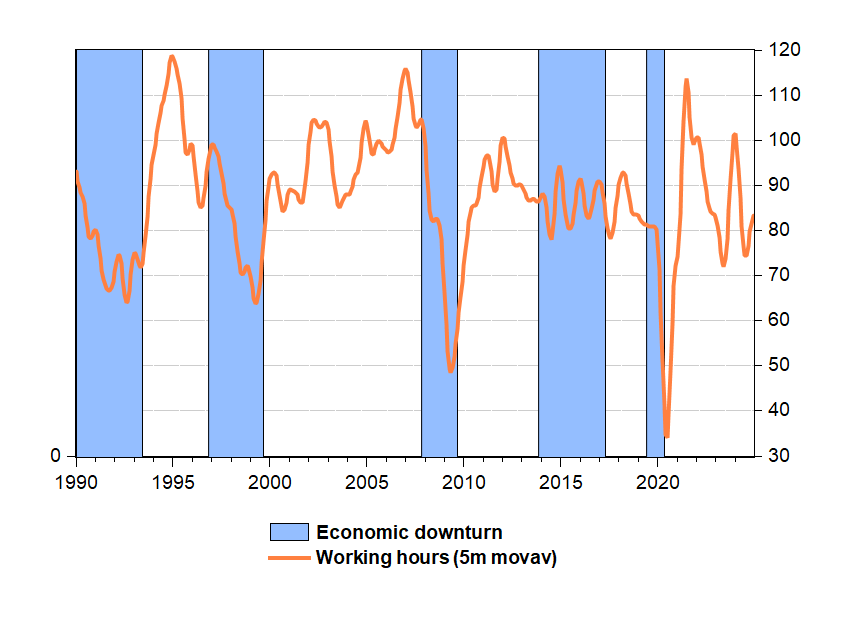
The initial road ahead will be characterised by unsynchronised improvement and regular setbacks, rendering the recovery hesitant.
Whereas fourth quarter high-frequency indicators and the BER’s business surveys depict a more consistent improvement on the demand side of the economy, retail, wholesale- and accommodation GDP (-0.4%) was still in contractionary territory in 24Q3 and real gross domestic expenditure (GDE) contracted owing to aggressive inventory disinvestment.
These adverse forces are likely to mend slowly, but surely. All four broad categories of household consumption grew during the middle quarters of 2024 and this momentum received added support with the implementation of the two-pot pensions system on 1 September and the easing of interest rates and inflation.
Most disappointing, was the sharp contraction of private fixed investment as the earlier boost of investment in the renewables sector wears off. While government and public corporations’ infrastructure spend boosted the aggregate, the latter was still 11.4% down (24Q3) compared to pre-covid levels (2019). A sustained improvement in demand conditions will move businesses to invest and create employment.
Unfortunately, fiscal policy remains tight, with the National Treasury intent on generating a primary surplus, which will release funds for much-needed social and infrastructure investment.
As the supply-side of the economy will take time to mend, inflation could derail matters should imbalances develop, either owing to excess demand, and/or delayed implementation of the required structural reforms.
In sum – the SA business cycle
The current state of the business cycle is more promising than at any time the past decade. Business confidence increased by 15 index points in 2024, and consumer sentiment by 10 points. The improvement is not spurious. Load shedding has stopped, a GNU has been instituted, monetary policy is easing, and structural reforms (in logistics and communication) are incrementally being implemented, assisting building and construction activity. SA’s financial markets have responded positively in a meaningful way.
The MPC’s policy message remains unanimous not to expect rapidly declining short-term interest rates. This is positive as it will support the decline in long-term interest rates, supporting the fiscus and lowering the hurdle rate for much-needed fixed investment, driving the business cycle and employment creation.
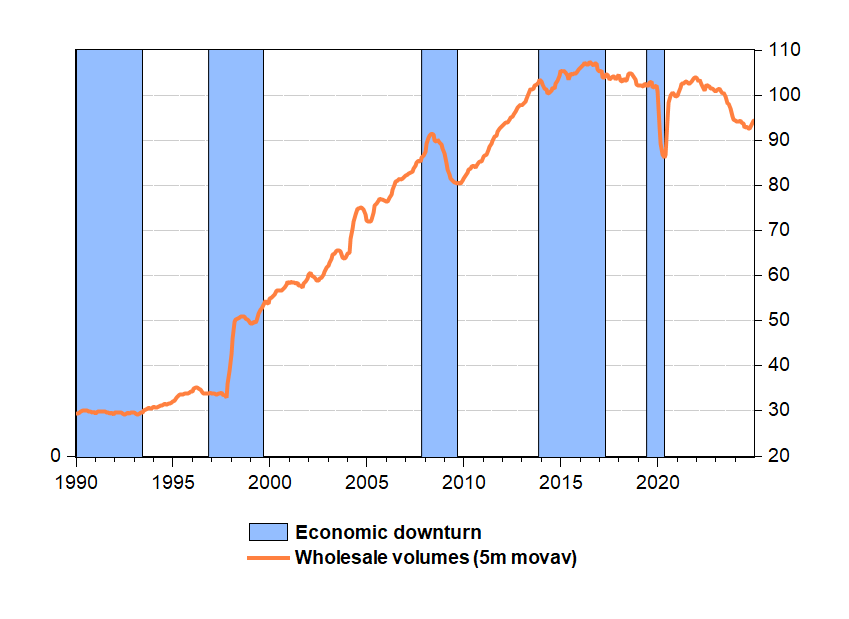
Albeit a major challenge lifting economic growth, green shoots are evident. Excluding agriculture, the modest economic momentum in 24Q2 continued in Q3. Encouragingly, all four broad categories of consumer spending lifted in 24Q2, with the expansion extended in Q3. BER surveys show that retail and wholesale volumes improved further in 24Q4. Consumer spending also benefited from the introduction of the two-pot pensions dispensation. Retail indicators show flattish growth, but the levels are the best in 10 years. New vehicle sales also jumped in October.
According to BCA’s recession-dating algorithm, a downturn shaped in the post-covid economic recovery (officially commencing in April 2020) from mid-21 to mid-23. A median UTP (Jul’24) is confirmed by 4 of the 5 components, while a LTP (Jun’23) is shown by 3 components. Not showing a LTP are manufacturing capacity utilisation (tending to lag/confirm turning points), and wholesale volumes, which did accelerate in 24Q4.
The RMB/BER business confidence index approaching a neutral level (in 24Q4) and a range of key other sectoral indicators improving beyond their long-term averages, is a strong business cycle signal.
Short-to medium-term business cycle prospects have improved and are better than at any time the past 10 years, but maintaining perspective is paramount.
The economy’s supply capacity, particularly in manufacturing, requires serious repair. This is a long-term project. Excluding the outlier value of vehicle dealer confidence, that of manufacturers are the lowest of the sectors covered in the BER surveys. Output volumes were flat and tending to contract towards the end of 2024.
Business executives are cautiously optimistic, investment still lags and faces formidable hurdles. The world economic climate and geo-politics are highly uncertain. Expect incremental economic progress in SA.
US ECONOMIC OUTLOOK MORE UNCERTAIN
The resilience of the US economy has been a beacon of hope in the world economy. Donald Trump’s clean sweep in the November 5th national election does not only spell major change in the US, but in the world too. The divisions in the US body politic are deep and the levels of inequality rising sharply and may accelerate, affecting the economy.
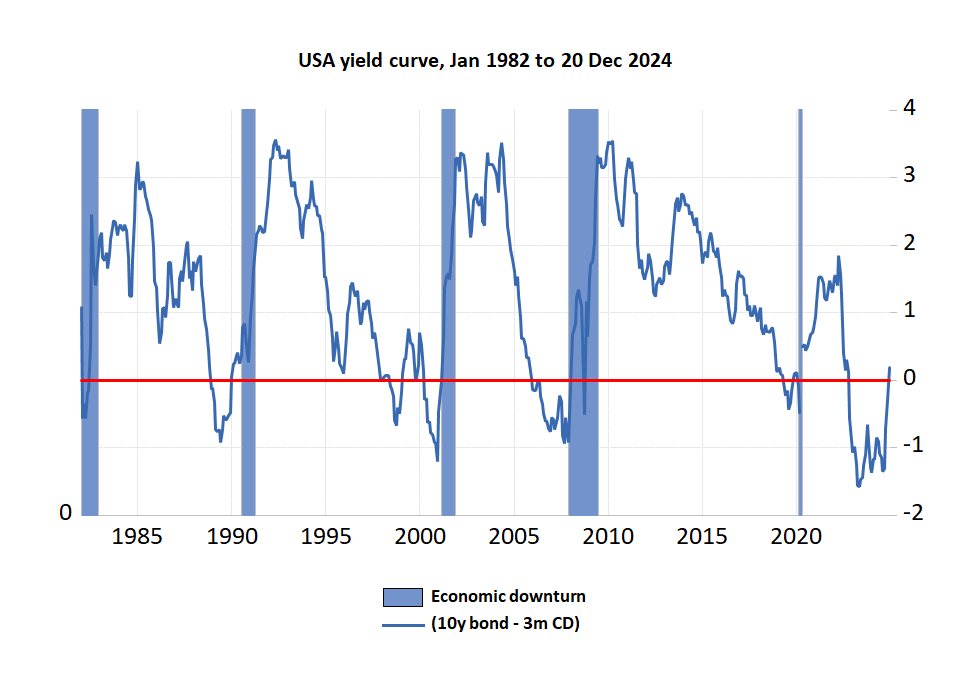
Trump entered the Whitehouse in 2017 as a decent economic momentum was underway, now the economy is showing signs of slowdown. Time to fasten seatbelts.
Year-on-year growth moderated to 2.7% in 24Q3 and real household spending, as well as in private fixed investment appears to be topping out, while net exports are subtracting from growth. The gradual tapering of the annual growth in non-farm payroll employment reflects the onset of this weakening.
Bold action by the Fed may ensure a soft-landing. The inflation tendency is uncomfortable though. Volatility in headline CPI (owing to changes in oil and food prices) and high wage growth render disinflation sticky. Long-term interest rates have spiked in the wake of Trump’s election, with the capital market being sensitised by the likelihood of tariff hikes and the fiscal impact of deep income tax cuts.
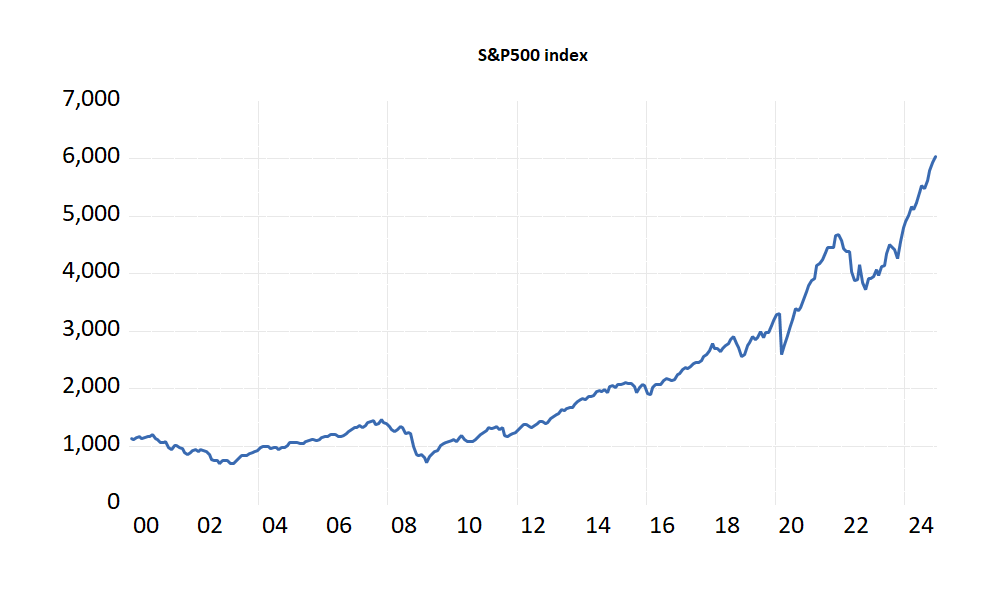
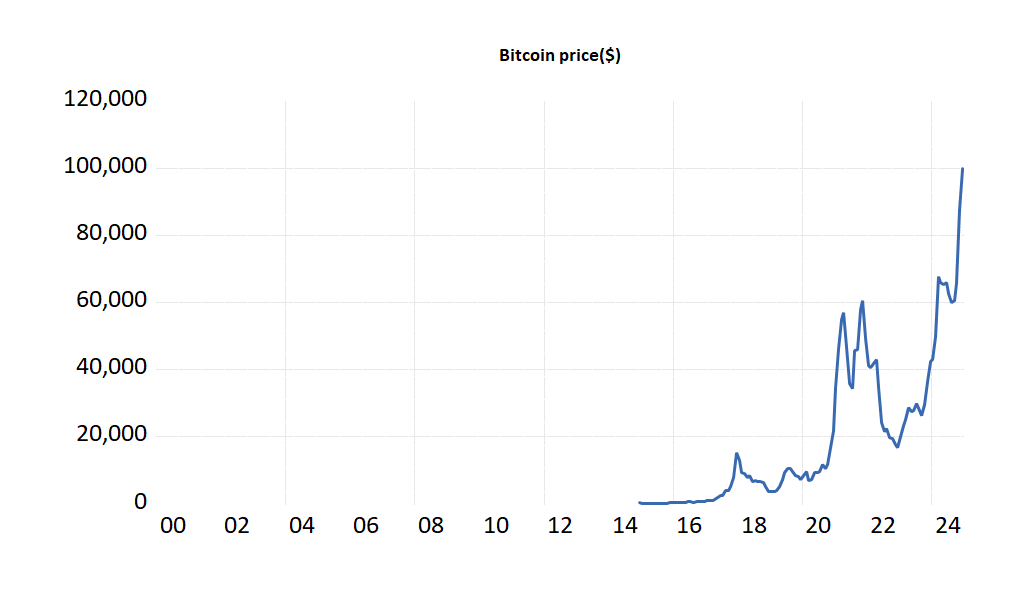
Financial markets (e.g., equities/ bitcoin) have responded strongly, but it is not clear to what extent this appreciation is driven by fundamentals or sentiment. The AI sector certainly adds to this lift.
Onshoring, infrastructure investment, improved (tech-driven) productivity growth, inter alia, will be important growth drivers. The challenges reside in the socio-political realm, given the anticipated acceleration in income and wealth inequalities, from already almost unbearable levels. Ironically, these risks will tend to benefit the US dollar, except if fiscal imbalance becomes unsustainable. The baseline view remains for a soft-landing next year, but ad hoc policy actions carry serious destabilising potential.
In all, an uncertain global economic outlook
In its October World Economic Outlook, the IMF warns that the otherwise stable outlook for world economic growth (compared to July and April) conceals much. The Fed interest rate pivot (March 2024) and early/aggressive monetary easing by the ECB, BoE and other major economies’ central banks (e.g., BoC) in the wake of stronger-than-anticipated disinflation in these economies, have shifted the proverbial deck chairs for emerging market economies. Furthermore, serious risks cloud the global economic outlook.
Whereas emerging economy currencies should benefit from lower interest rates in the major economies, this is not happening as war and the associated geo-political tensions create uncertainty, benefiting the US dollar (as well as other perceived ‘safe haven’ currencies). The strong US dollar and the risks embodied in potential commodity price spikes (e.g., the crude oil price) or international financial market volatility could tighten general financial conditions, leaving emerging economies with foreign currency denominated debt exposed.
Protectionist trade policies linked to onshoring objectives, and social unrest tied to climate crises as well as domestic socio-political upheavals, also have the potential to destabilise world economic growth. China announced a macro-economic stimulus package, which may have a countervailing influence as the country faces up to its property market crisis.
Middle East geo-politics are also reconfiguring following the fall of Syria’s ruler, Bashar-al-Assad. It is to be hoped that the current wars in Russia/Ukraine and the Middle East will end. Fact is, that deep world economic uncertainties are likely to prevail over the near future.
“When you adopt a cyclical worldview, your outlook will be in the minority whenever the chance of an economic turning point is high”.
Achuthan & Banerji