

ECONOMIC RECOVERY MOMENTUM REMAINS A TRICLE, 21Q2
Real GDP grew by 1.2% during the second quarter of 2021 when compared to the first quarter and was up 19.4% compared to the depth of the COVID-19 induced plunge a year ago. The rebound of economic activity was particularly strong during the third quarter of last year when the level 5 COVID-19 restrictions on economic activity were relaxed. Subsequently, the recovery momentum slowed sharply from 13.9% (third quarter) to 2.2% (fourth quarter) and 1.1% during both the first and second quarters of 2021, excluding the somewhat volatile agricultural sector. Including agriculture real GDP, which jumped by 6.2% during the second quarter of 2021, the recovery momentum picked up slightly to 1.2%.
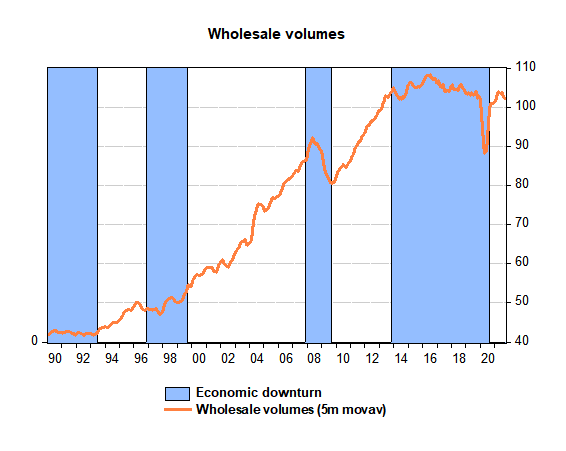
Apart from agriculture, which continues to benefit from favourable climatic conditions, the strongest performing sectors of the economy during the second quarter of 2021 included, transport & communications (up 6.9%), personal services (2.5%), retail, wholesale & accommodation (2.2%) and mining (1.9%). The water & electricity sector also grew slightly (0.7%). Compared to pre-crisis levels (19Q4), the agricultural sector is up 17.6%. A few other broad sectors have surpassed pre-crisis real GDP levels, i.e. personal services (2.6%); financial & business services (1.7%) and mining (0.2%). The broad sectors which lag the recovery, include construction (down 20%); transport & communication (-7.7%); manufacturing (-3.2%); retail, wholesale & accommodation (-3.1%); and water & electricity (-1.0%). The output from the general government, as well as government consumption spending remained flat in real terms throughout the crisis and recovery.
On the demand side of the economy, it is clear that gross domestic fixed investment lags the recovery. Despite being up 16.1% from the plunge a year ago, the level remains 12.0% down compared to pre-crisis levels. This is also reflected in the fact that the level of imports was 7.9% down compared to pre-crisis levels in the second quarter of the year. The contraction in real household spending and its recovery moved in line with overall GDP and remained 1.4% down compared to pre-crisis levels.
Exports contributed strongest to the recovery (42.4% up on year-ago levels, including growth of 4.0% during the second quarter of 2021). In fact, real exports have almost returned to pre-crisis levels (being only 0.7% lower). The primary sector/ export growth/ favourable commodity prices picture clearly remained part of the second quarter general economic growth outcome.
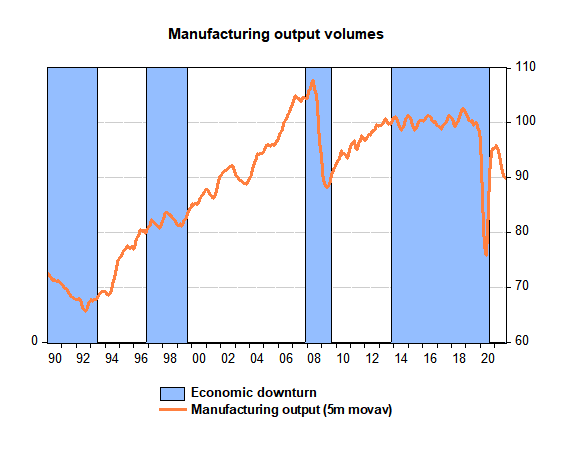
Of concern is the fact that the rebound in manufacturing (measuring 35% during the third quarter of 2020) petered out sharply to 0.5% quarterly growth during the first quarter of 2021, followed by a 0.8% contraction during the second quarter. This sector is exposed to the recurrent waves of COVID-19 sickness and associated economic lockdown measures, as well as bottlenecks in (global) supply chains. This prevents it from fully participating in the export recovery.
The manufacturing output component of the BER’s recession-dating algorithm registered a peak (December 2020). This is a worrying sign from a business cycle perspective as the sector has wide forward and backward linkages in the economy. The sector’s contribution to overall economic activity is on a downward trend; however, including indirect linkages, it still accounts for around one fifth of aggregate economic activity.
In sum: the business cycle
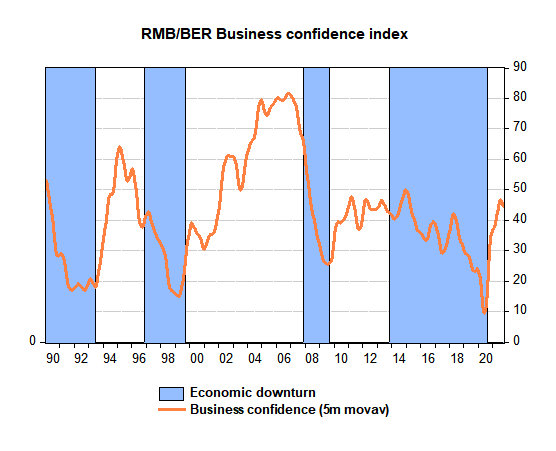
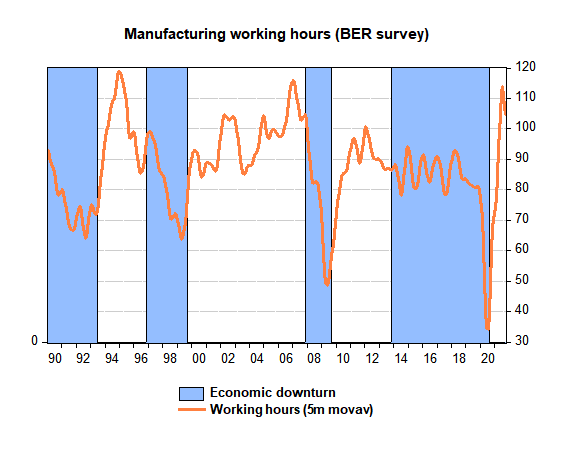
The current trough-to-trough business cycle peaked in November 2013. There were signs of a bottoming in the economy towards the end of 2016/early 2017, but this failed to materialise. Following the COVID-19 induced plunge in activity during 20Q2, the economy rebounded strongly – three components of the recession-dating algorithm registered LTPs, clustering around August/September 2020, i.e., business confidence, manufacturing output and working hours. This may be signalling the formation of a proper LTP in the business cycle, but it remains too early to call. The latest peak signal (December 2020) in manufacturing output is ominous; the improvement in the manufacturing sector is only visible in a strong recovery of working hours.
The RMB/BER Business Confidence Index declined by 7 points, interrupting the 45 points rebound from the depths of the second quarter last year. This decline in business confidence is almost entirely related to a sharp drop in business confidence in KZN, the region being rocked by deep socio-political unrest in July. These events are likely to exert a negative influence on third quarter GDP growth, being evident in high-frequency economic indicators. The level of business confidence remains well-above pre-crisis levels, suggesting the economic recovery remained on track during the third quarter. Consumer confidence and spending remain below pre-crisis levels and is unlikely to lead a strong economic recovery, given the fiscal constraints. Of late, developments in China have rattled the markets, raising a red flag regarding the export recovery. In all, there is little evidence of a strong expansion ahead and worrying signs accumulated during the third quarter.
“When you adopt a cyclical worldview, your outlook will be in the minority whenever the chance of an economic turning point is high“
Achuthan & Banerji